



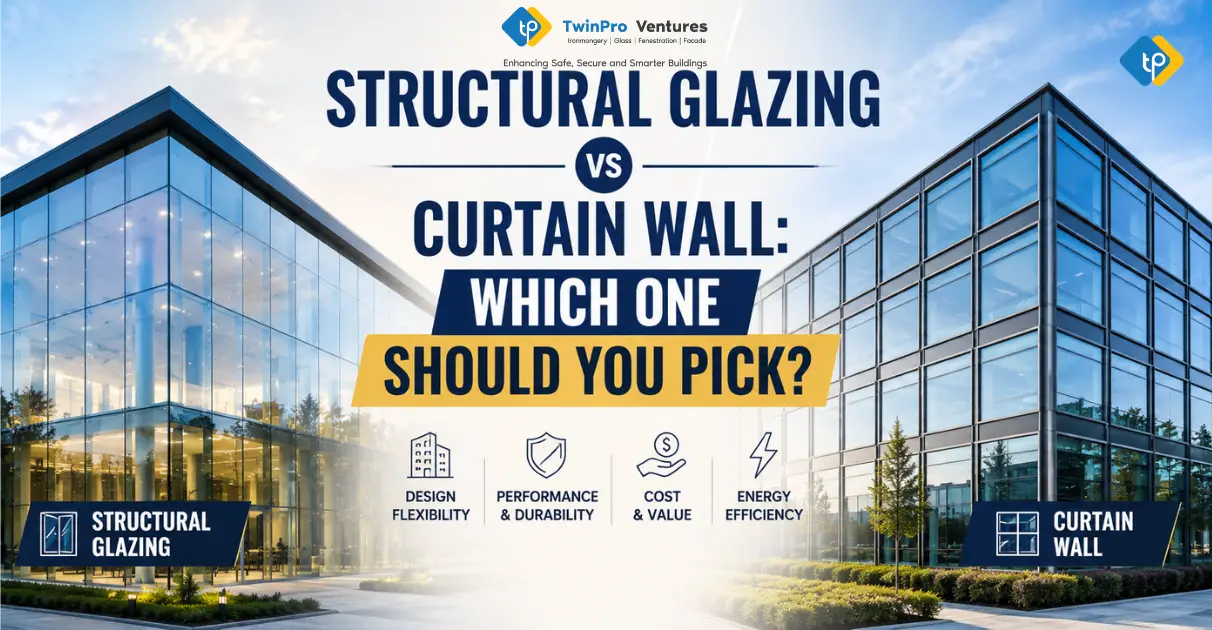
Structural Glazing vs Curtain Wall: Which One Should You Pick?
Structural Glazing vs Curtain Wall: Which One Should You Pick?
This is a scene we see a lot. A client walks in, shows us a photo of some glass building they saw online, and says, “Can we make ours look like this?” Then the real question comes up. Is that glass building made with structural glazing? Or is it a curtain wall?
Most people have never had to think about this. Why would they? But if you are planning a new building, a tower, a showroom, even a small office, knowing the difference between structural glazing vs curtain wall can save you a lot of money and stress later. We get asked about structural glazing vs curtain wall on almost every glass project we touch. So let us just talk it through. Plain words, no big terms, just the kind of honest answer we’d give a friend over coffee.
What Are These Two Things, Really?

Let us keep this simple.
Structural glazing is when glass panels get glued straight onto the building frame using a strong silicone glue. There is no metal you can see from outside. The glass looks like it is just floating there. That super clean, frameless look on fancy hotels and big company buildings? That is this.
Curtain wall works differently. It uses an aluminium frame on the outside of the building, and you can see this frame. The glass sits inside little boxes made by the frame, like a grid. This has been around since the 1950s, and it is still the most used glass system on buildings everywhere.
Both use glass, sure. That is exactly why people get confused. But how they are built, what they cost, and how long they last, that is where the real difference is. And that is why the structural glazing vs curtain wall question matters before anyone signs off on a design.
One more thing worth saying. Builders and salespeople sometimes use the word “glass facade” loosely, and they could mean either system. So you end up confused until the actual drawings show up. Our advice? Ask the structural glazing vs curtain wall question early, in the first few meetings. It saves a lot of back and forth later.
Looks: Why It Matters More Than People Think
If we are talking pure looks, structural glazing wins. Not even close.
Since there is no visible frame, the whole building looks like one big sheet of glass. It is bold.It draws people’s attention. If you want a building that will get noticed, this is the building.
So one of our clients had a showroom a while ago that he wanted to be enclosed by a glass box that had no lines to separate it.We had a client once who wanted his showroom to be a glass box with no lines in between.
A curtain wall just could not give him that. So we went with structural glazing, and honestly, the final building looked exactly like the picture in his head.
But do not think curtain wall looks boring. It does not. Today’s curtain walls come in slim frames, different finishes, even different colours. If you are building something with an industrial vibe, or a modern office park, that grid pattern actually works in your favour. The frame stops being a flaw and becomes part of the design.
Our honest opinion? If looks come first and the budget can handle it, go structural glazing. When aesthetics, performance and cost are important factors, the choice is generally a better one to make for curtain wall.
Performance: Heat, Wind, and Rain
This is where people get it wrong a lot. They think structural glazing, being more expensive, must also work better. Not really true.
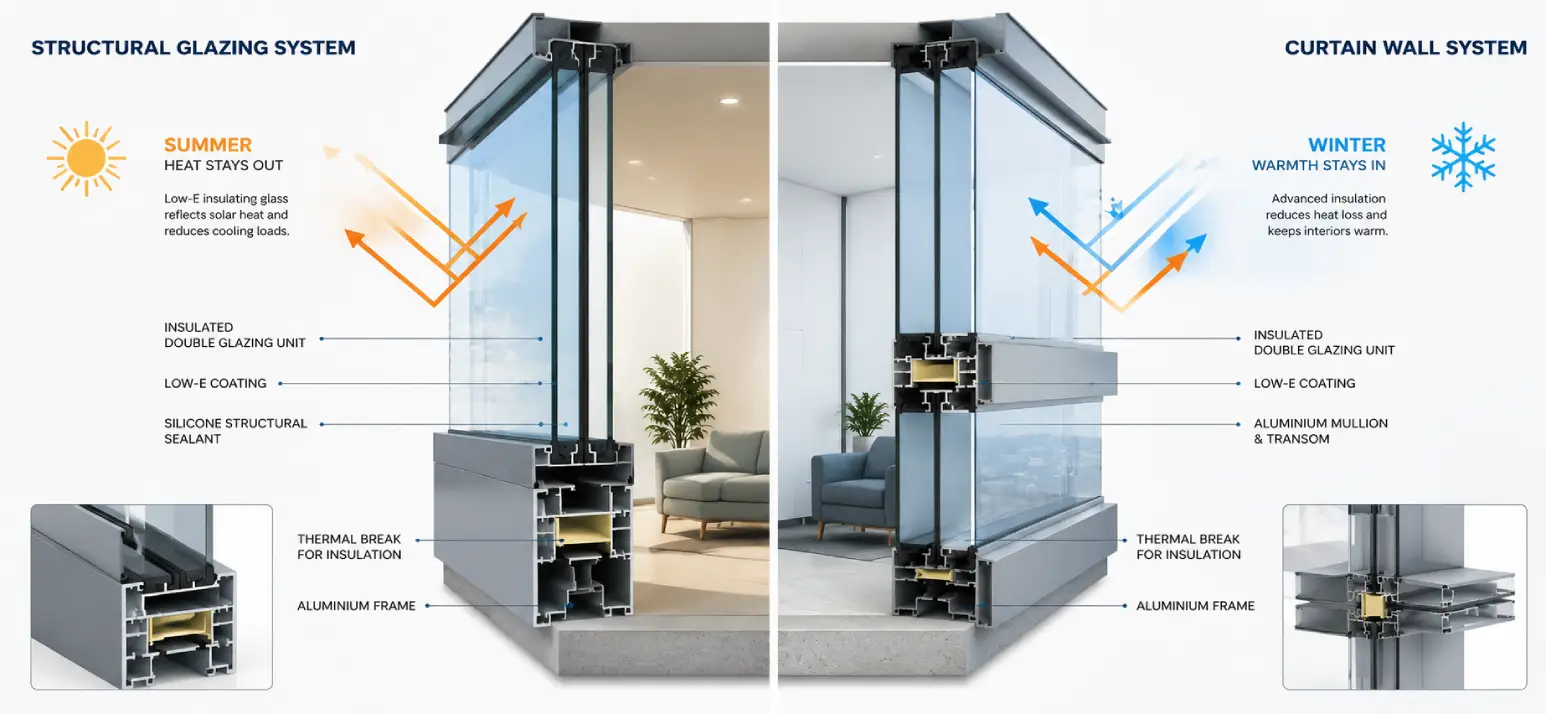
Modern curtain walls use what is called a thermally broken frame. The problem is that there is a small barrier within the aluminium that prevents heat conduction to pass through it easily. Add double or triple glazed windows and you’ve got a system that will keep the room cool in summer and warm in winter, with little effort.
That is a huge deal of a temperature relief in a hot environment such as most of India. A quality curtain wall will help to keep your building cooler and allow your AC to not work as hard.
Structural glazing can perform well too, especially with good glass. But this is the catch. The silicone glue holding it all together sits outside, all day, every day, getting hit by sun and rain. Over time, that glue weakens. And when it does, the heat performance drops with it. So you will need to redo the sealant regularly. It’s not a “maybe,” it’s a must. In places with strong sun and big temperature swings, you will be doing this sooner than later.
Wind? Both handle it fine, just in different ways. With structural glazing, the glass itself takes some of the wind load, which is part of why there is less frame needed. With curtain wall, the metal grid spreads the wind pressure back into the building.
Water is where curtain wall really pulls ahead. Most curtain walls have a drainage system built right into the frame, so any water that sneaks in gets channeled out. Structural glazing depends almost completely on that silicone seal staying solid. If it fails anywhere, water gets in, and finding exactly where the leak started can be a real pain.
So this is the bottom line. Curtain wall is the safer bet long term. Structural glazing can match it, sure, but it needs more attention along the way.
Cost and Upkeep: The Part Nobody Likes Talking About
Let us just be honest. Structural glazing costs more to put up. Sometimes a lot more.
This is why:
- The silicone bonding has to happen in a factory, under controlled conditions. You can not just glue glass on-site and hope for the best.
- The glass panels are bigger and heavier.
- Testing and engineering rules are stricter.
- You need workers who specialise in this, not just any glazing crew.
Curtain wall is much simpler to put together. The aluminium pieces come in standard sizes, get shipped to site, and get installed by a wider pool of skilled people. Costs are easier to plan for, and the work usually finishes faster. On big commercial jobs, that adds up.
However, this is the more important aspect. The initial cost is not all that matters.
Think 20, 30, even 40 years down the line. Seals in a structural glazing system should be replaced periodically over five to 10 years and after 15 to 25 years.That work is not cheap either, since you often need rope teams or hanging platforms just to reach the upper floors. Factor that into the real cost of the building, not just what you pay on day one.
Curtain wall maintenance is much more routine. Swap a gasket here, clean a drainage channel there, touch up a frame now and then. It’s cheaper, and it’s easier to plan around.
We always say the same thing to clients. Do not just look at what it costs to put the system up. Look at what it will cost to keep it looking good for the next 30 years. That is the number that actually matters when you’re weighing structural glazing vs curtain wall for the long haul.
A Word on Building Codes and Safety

No matter which way you lean in this structural glazing vs curtain wall decision, do not skip the safety side of things. Structural glazing usually needs third-party testing on how strong that silicone bond really is, because if it fails, you’re not just looking at a cosmetic problem, you’re looking at falling glass. Curtain wall goes through its own round of structural and water tests before it gets the green light.
We have seen projects get delayed by months because someone figured this could be sorted out later. It can not, not without expensive rework. Don’t wait until the design is final to involve your structural engineer in the curtain wall vs structural glazing discussion. It’s a little step that is a big headache.
For your more reference you can check Advance Standard Transforming Markets
Quick Recap: Which One Fits Your Project?
- Looking for a frame-less, all glass appearance? Go structural glazing.
- Looking to something that’s easy to set up, relatively inexpensive to maintain, and high performing? Go curtain wall.
- Tight budget but still want a good-looking glass facade system? A thermally broken curtain wall with decent glazing will do the job.
- Building something special and want a wow moment? Use structural glazing in a few key spots, like the entrance, and curtain wall for the rest.
Conclusion
Yes, there isn’t a right answer here. It will depend on the type of building, the budget and how much value you are looking to get from the building over time.
Desire a straightforward, frame-less glasses style? Go structural glazing. Looking for something that lasts, is cost-efficient to run and easy to plan for?
Go curtain wall. There’s no shame in going back and forth on structural glazing vs curtain wall a few times before deciding, most people do. Tight on money but still want a good-looking facade? A thermally broken curtain wall with quality glass will get you most of the way there. And if it’s a flagship project, mixing both, structural glazing for the showpiece bits, curtain wall for the rest, often gives you the best of both.
What we’ve learned, after doing this for a while, is that the best results come when this decision gets made early. Bring the cost planner, the structural engineer, the architect and the facade consultant to one room. Don’t wait until the design is finalized, or halfway through the construction process when everyone has had enough of change and it costs too much.
Both systems can give you a building that looks good and lasts, as long as they’re designed well and put up by people who actually know what they’re doing. The real question in this structural glazing vs curtain wall debate isn’t which one is “better” on paper. It depends on the one you can use for your project, your climate, and your budget.
Still not certain about which way to turn? Talk to our team. Your design, your budget, and your local weather will all be taken into consideration as we help you select a glass facade system that’s more than a pretty picture in a brochure.
Frequently Asked Questions – structural glazing vs curtain wall
- 1. What is good about structural glazing?
It provides an almost frame-less, modern and clean look to the building. It also allows a considerable amount of natural light to enter, which will help reduce energy consumption and create a brighter and more open interior.
2. What’s not so great about curtain walls?
They are not cheap to install or maintain. The materials and the work involved add up. And they need regular cleaning and resealing to stop water getting in and to keep performing well.
3. How does a curtain wall actually stay up?
It attaches to the building’s main frame, usually steel columns or concrete beams, using anchors, brackets, and mullions (the vertical bars in the frame). These attachment points pass the load, wind, weight, all of it, back into the building’s structure, keeping the whole thing stable.
4. What is good about curtain walls?
They add modern look to the building and allow a lot of light to enter. They also will not weigh much more, either. They are good at fending off wind and rain, too.
5. How thick is structural glazing glass?
Depending on the design, the type of glass and the wind loading on the glass, the results will vary. The thickness of most panels is between 6mm and 24mm thick. The thickness of the insulated glass units varies from 24mm to 50mm or beyond for the project.