


Why Fire Rated Glass Partition Systems Are Changing the Game for Commercial Interiors
Why Fire Rated Glass Partition Systems Are Changing the Game for Commercial Interiors
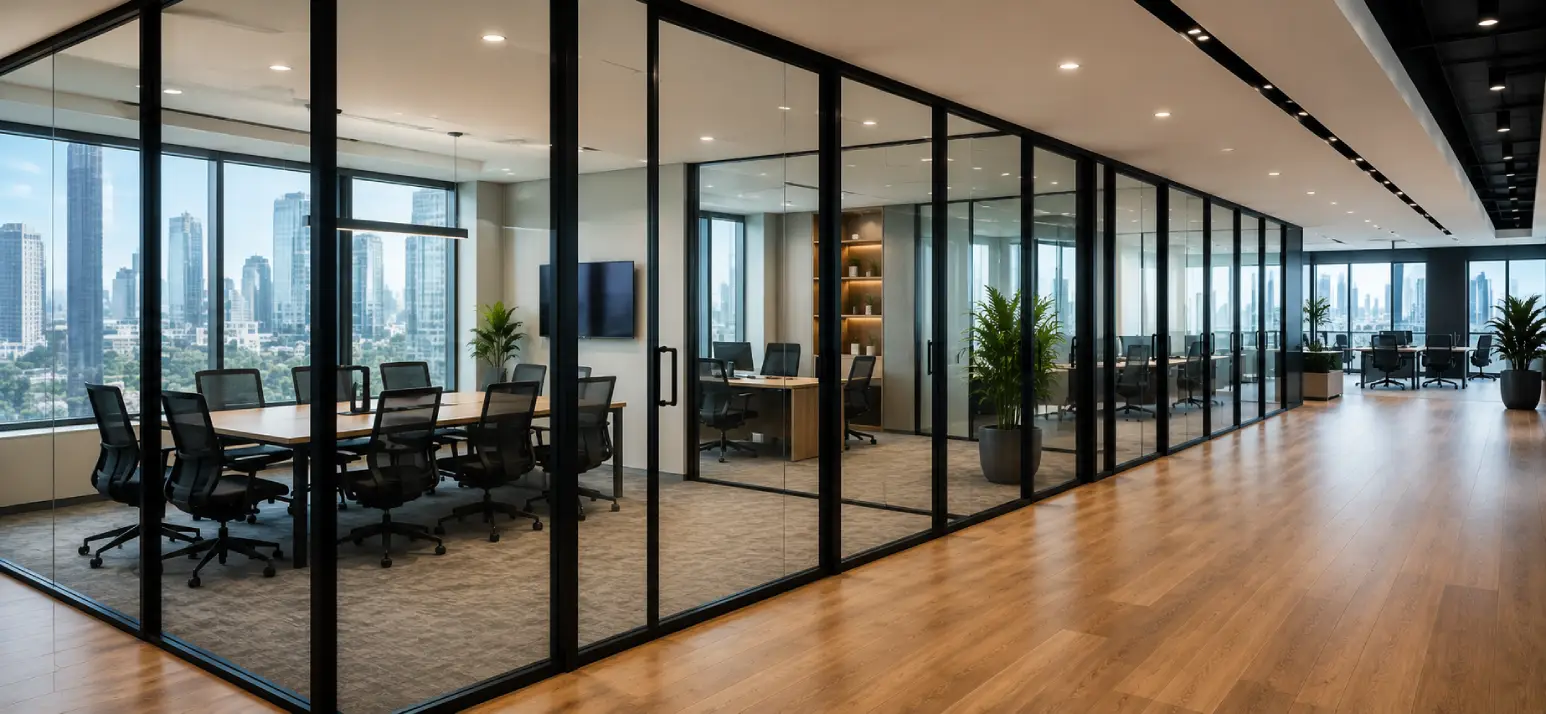
Walk into any modern office, hospital corridor, or hotel lobby today, and you will notice something odd. Walls are not really walls anymore. They are glass. And somewhere behind that glass, fire rated glazing is quietly doing some heavy lifting.
For years, designers had to pick a side. You got a space that looked good, or one that passed the fire code. Rarely both. That is the exact gap Fire Rated Glass Partition Systems were built to close. We have sat across the table with architects, interior designers, and facility managers who all ask us some version of the same question: how do you open up a space without giving up the fire protection your building actually needs?
It is a fair question, and you would be surprised how often it comes up. Builders, project managers, even some architects, still treat fire safety and good design like two separate jobs that happen at different stages. By the time the fire consultant shows up, half the layout’s already locked in, and everyone’s stuck squeezing compliance into a design that was never built for it. Flip that order around early, and you save yourself a real headache later.
This is what this blog covers: what these Fire Rated Glass Partition Systems actually are, where they make the biggest difference, what they will cost you in upkeep down the line, and what to watch for before you sign off on a project. If you are planning a new build or fixing up an old one, give this ten minutes.
What Is Actually Inside a Fire Rated Glass Partition System?
Let us start with the basics, because the science behind this is actually pretty cool.
Independent labs test and certify the glass in every Fire Rated Glass Partition System to hold back fire and heat for a set window of time, usually 30, 60, or 90 minutes, and sometimes up to 120. That number is not a marketing line. It comes from real testing against standards like ASTM E119, UL 10B, or EN 1364, depending on where you are building.
What makes this glass different from regular tempered or laminated glass is not just the thickness. It is the chemistry. Right now, three technologies dominate modern Fire Rated Glass Partition Systems.
- Ceramic glass: handles heat well and barely expands. That is why you see it in vision panels and door frames.
- Intumescent interlayer glass: sandwiches a clear gel between two or more panes. Heat hits it, the gel turns cloudy and swells up, and that blocks radiant heat from getting through.
- Wire glass: the old school option. Steel mesh is baked right into the glass so it doesnot shatter when things heat up.
One thing trips people up every time: integrity versus insulation. Integrity rated glass stops flames and smoke from getting through. Insulation rated glass does that too, and it also keeps the heat down on the other side. Figure out which one your project actually needs before you spec anything.
Where These Systems Earn Their Keep
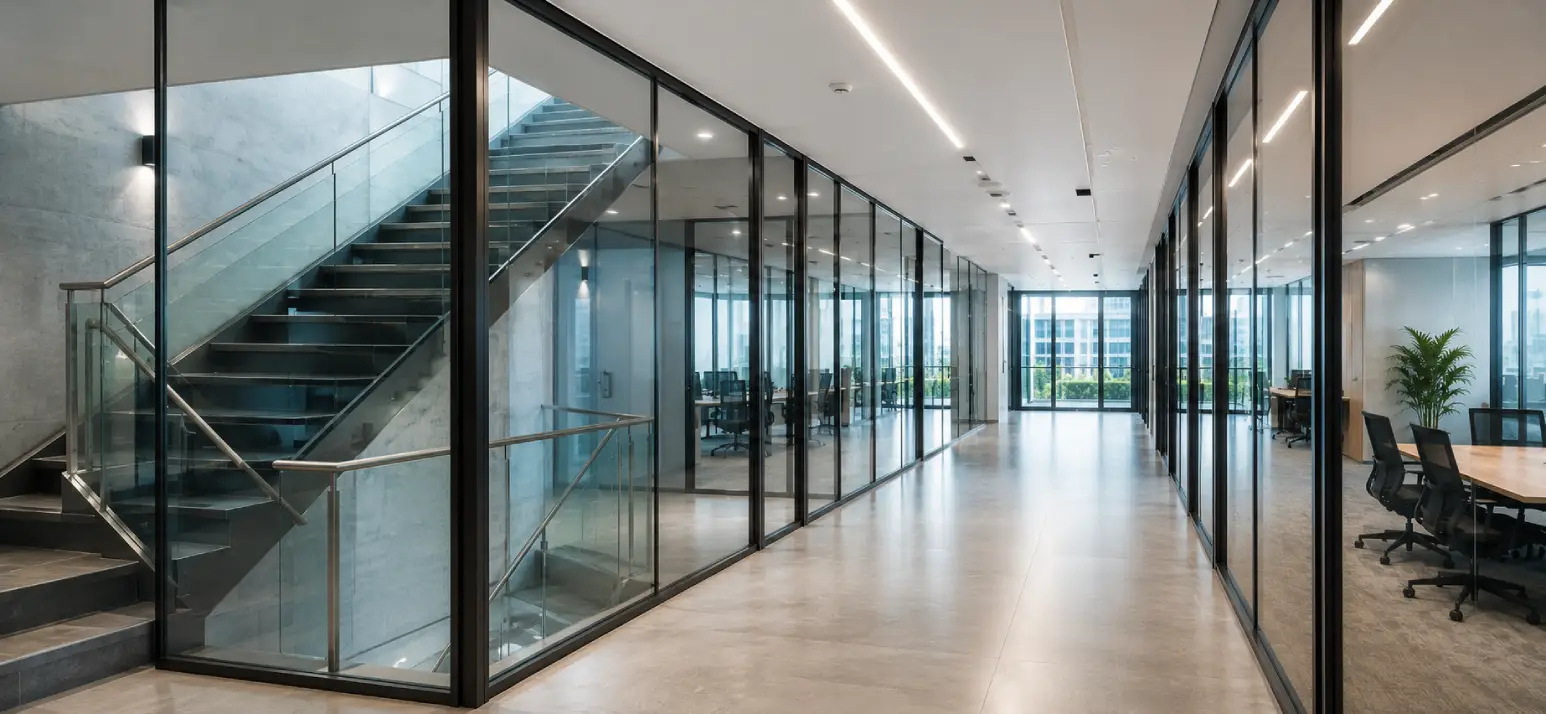
Fire rated glazing is not required everywhere in a commercial building. But in a few specific spots, it is not optional. It is the law, and honestly, it is just common sense.
Stairwells and exit corridors top the list. These are evacuation routes, and most building codes around the world demand fire resistance here. Swap out solid masonry for glass, and people actually move faster during an evacuation, simply because they can see where they are going.
Server rooms and data centres are another easy fit. High value gear, lots of heat, zero room for error. A rated glass wall lets you keep an eye on things without breaking the fire compartment around it.
Hospitals and labs have their own headaches: contamination risk, sterile zones, sensitive equipment everywhere you turn. Fire Rated Glass Partition Systems give staff the visibility they need to keep an eye on patients, while still meeting healthcare fire separation rules.
Even a five star hotel lobby or a flagship retail store gets something out of this. Nobody wants a chunky wall breaking up that open, airy feel customers expect. A floor to ceiling fire rated glass wall gets you the fire separation without killing the flow of the room.
Banks lean on Fire Rated Glass Partition Systems too , especially around server rooms, vaults, and cash handling areas, where fire separation and keeping an eye on things both matter at once. Schools and universities are catching on as well, especially in science labs, libraries, and shared corridors, where a big group of students needs a fast, clear way out if something goes wrong.
Nobody Told You These Could Look This Good
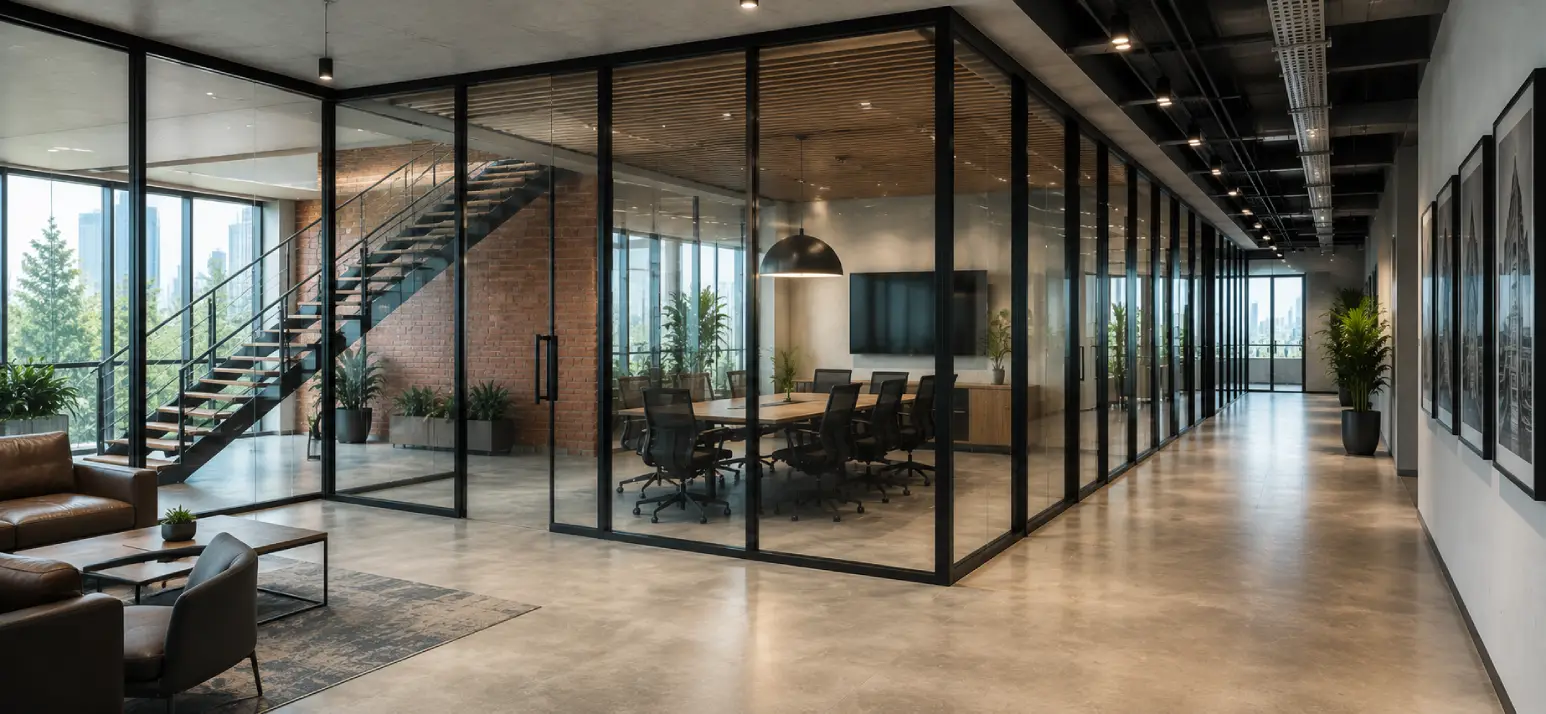
This is a mistake we see all the time. People think fire rated glazing means bulky frames and that old wired glass look from a 1970s factory floor. That is just not true anymore.
Modern Fire Rated Glass Partition Systems come with frameless or slimline framing now, with sightlines as narrow as 18mm. The glass can be crystal clear, low iron for true colour, frosted, or even printed with branding and graphics, all without touching the fire rating.
Frame materials have moved on too. Steel, aluminium, even timber finish options that blend right into the rest of your interior. A lot of these systems also pick up daylight credits for LEED or BREEAM certification, since they let natural light reach deeper into a floor plate. Less artificial light, happier people.
Acoustic performance is the one thing people forget to ask about. A lot of fire rated glass partition systems now come with acoustic lamination, hitting Rw 40 to 50dB. That means you get fire protection and sound isolation out of one single partition, which genuinely helps if you’re carving meeting rooms out of an open-plan office.
Bottom line: a Fire Rated Glass Partition System is not something you settle for to pass code. Done right, it becomes a design feature in its own right.
The Compliance Part You Cannot Skip
This is where projects go sideways if nobody’s paying attention, which is why we always push clients to bring in a specialist early. The requirements shift depending on building type, occupancy class, and location.
In the US, you are mostly dealing with three references. The International Building Code sets fire separation rules by occupancy type. NFPA 101, the Life Safety Code, covers exits and escape routes. UL Listings give you the independent stamp confirming a system actually performs the way it is rated.
In the UK and Europe, EN 13501 and BS 476 take over. The Middle East and parts of Asia often mix international codes with local rules, so it’s worth checking what actually applies to your site.
This is the part people miss. The fire rating belongs to the whole assembly, not just the glass. The frame, the fixings, the seals, the way it is installed, all of it has to match the exact setup that got tested. Swap in a different frame profile, or use the wrong fixings, and you can wipe out the entire rating even though the glass itself is fine.
Always work with suppliers who provide complete Fire Rated Glass Partition Systems documentation, not just a glass certificate. You want third party test evidence, a clear spec sheet, and proper training for whoever’s installing it. That gap, between paperwork and actual testing, is what separates a real Fire Rated Glass Partition System from one that just looks the part.
This is also where your timeline can take a hit if you are not careful. Certified frames and glass usually come with longer lead times than standard materials, especially if you are sourcing from outside your region. Build that into your schedule early, instead of finding out two weeks before handover.
What You Are Actually Paying For
Cost is usually the first thing on a client’s mind, and fair enough. Rated glass costs more than ordinary glass, sometimes two to three times as much, depending on the rating and the technology behind it. But that number on its own does not tell you the whole story.
You are not just buying a sheet of glass. You are buying a tested assembly, the labour to install it right, and the paperwork that proves it will hold up on the day it matters. Cut corners on any of that, and you put the whole rating at risk. A cheap quote that skips testing documentation usually ends up costing more later, once you’re paying for repair work.
When you are comparing Fire Rated Glass Partition Systems suppliers, ask a few direct questions. Can they show you the test certificate for the exact setup you are buying, not just something similar? Do they make the frame system themselves, or source it from someone else with their own paperwork? Have they put this exact system into a building in your region before, and can they point you to one? A supplier who answers all three without blinking is usually worth your time.
What Happens After It Is Installed
Fire protection is not a buy it once, forget it forever deal. Fire Rated Glass Partition Systems need the same ongoing care as the rest of your building’s fire safety setup.
The good news is Fire Rated Glass Partition Systems are pretty low maintenance compared to the alternatives. No moving parts to service, the glass holds up fine under normal use, and because it’s see through, you will spot damage the moment it happens.
A few things worth checking on a regular schedule:
- Seals and intumescent strips: never let these get damaged, painted over, or crushed. They are the part actually doing the sealing once heat hits.
- Frame condition: steel frames in humid places need a regular check for rust around the fixings.
- Documentation: keep it current. Hold onto records of the system you installed, its test certification, and whatever maintenance you have done. Rules around building safety paperwork keep getting tighter everywhere. The UK’s post Grenfell legislation, for instance, now demands much more detailed records for higher-risk buildings.
On cost, premium systems usually come with warranties of 10 to 25 years, and you willl rarely need to replace one unless something physically damages the glass. Add in what you save on your lighting bill from all that daylight, and the numbers stack up nicely over the life of the system.
FAQ
What’s the actual benefit of Fire Rated Glass Partition Systems in a building?
It buys people time to get out safely, and gives firefighters a window to respond before the fire spreads.
Can a glass partition really carry a fire rating?
Yes. A 30 minute fire rated glass partition, for example, holds back flames and smoke long enough to stop fire from moving between zones.
Why does workplace fire safety actually matter?
Because it keeps people safe, keeps you compliant, and means your team actually knows what to do if something goes wrong.
What’s a fire-rated wall actually used for?
It is a wall built and certified to hold back fire and heat for a set time, basically a containment barrier for the rest of the building.
How do I know if my building actually needs one?
Check your local building code for your occupancy type, or just ask us. We’ll tell you straight whether you need it or not.
Is fire-rated glass really worth the extra cost?
Yes, once you factor in the lighting savings, the lower maintenance, and the insurance and compliance headaches it saves you down the road.
Conclusion
Open, bright, and safe. Modern Fire Rated Glass Partition Systems mean you genuinely don’t have to pick just one. A well specified Fire Rated Glass Partition System gives you all three, passes inspection, and keeps your insurer happy too. The trick is treating it as a full system instead of just a glass order: the right code knowledge, the right supplier, the right install, and the right upkeep after that.
We have worked on these systems across offices, hospitals, retail spaces, and hospitality projects in Coimbatore and beyond, and we know exactly which questions to ask before the first panel goes up. If you’re planning a project and want help figuring out which Fire Rated Glass Partition System actually fits your space, talk to us at Twin Pro Ventures. We’ll walk you through it, panel by panel.