


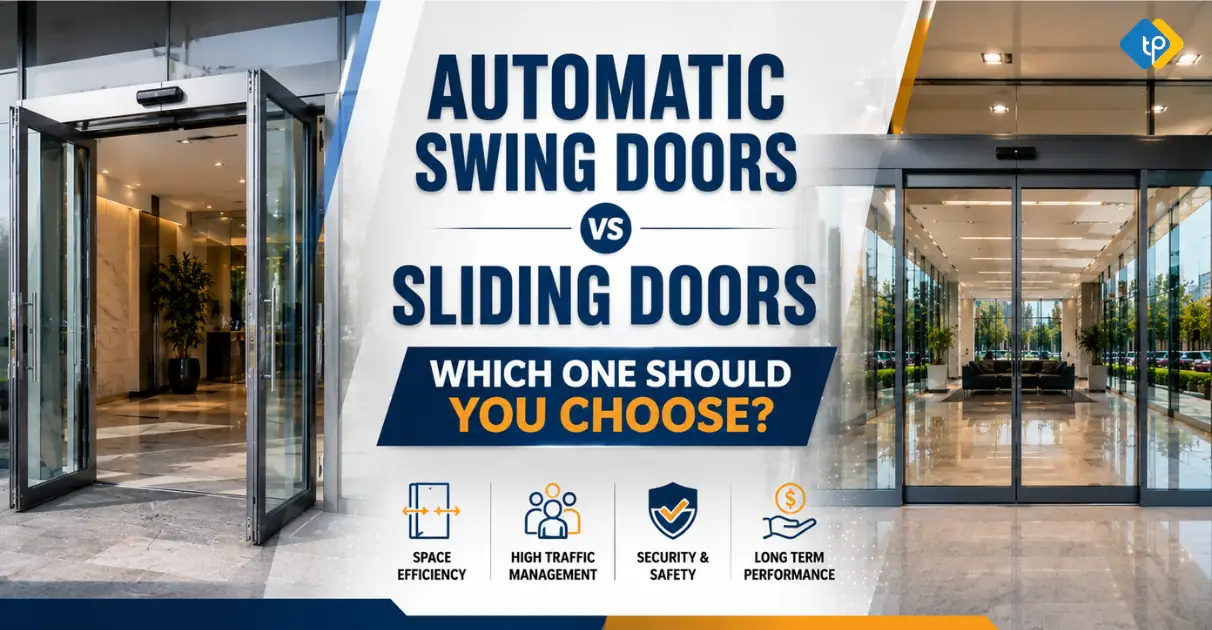
Automatic Swing Doors vs Sliding Doors: Which One Should You Choose?
Automatic Swing Doors vs Sliding Doors: Which One Should You Choose?
Picking new doors sounds simple until you actually try to do it. Someone throws out “automatic swing doors” and “sliding doors” like you are supposed to know the difference already. You do not. Nobody does at first.
We have put in a lot of doors at TwinPro Ventures over the years, and this exact question comes up almost every time. It is not a hard decision once you know what to look for, but it is not a
toss up either. It really depends on your space, how many people walk through daily, and what you are okay spending.
Most folks assume one type is just flat out better. It is not that simple. Both do their job. They just do it in different ways, for different situations. Once that clicks, picking gets a lot easier.
We had a client last year, a small dental clinic, who insisted on sliding doors because their old office building had them. Turned out their new spot was maybe half the width, and the sliding track just would not fit without knocking out a wall. Swing doors ended up being the obvious answer once we walked the space together. Sometimes the door you think you want is not the door your building can actually handle.
This is everything you actually need to know.
What Are Automatic Swing Doors, Exactly?
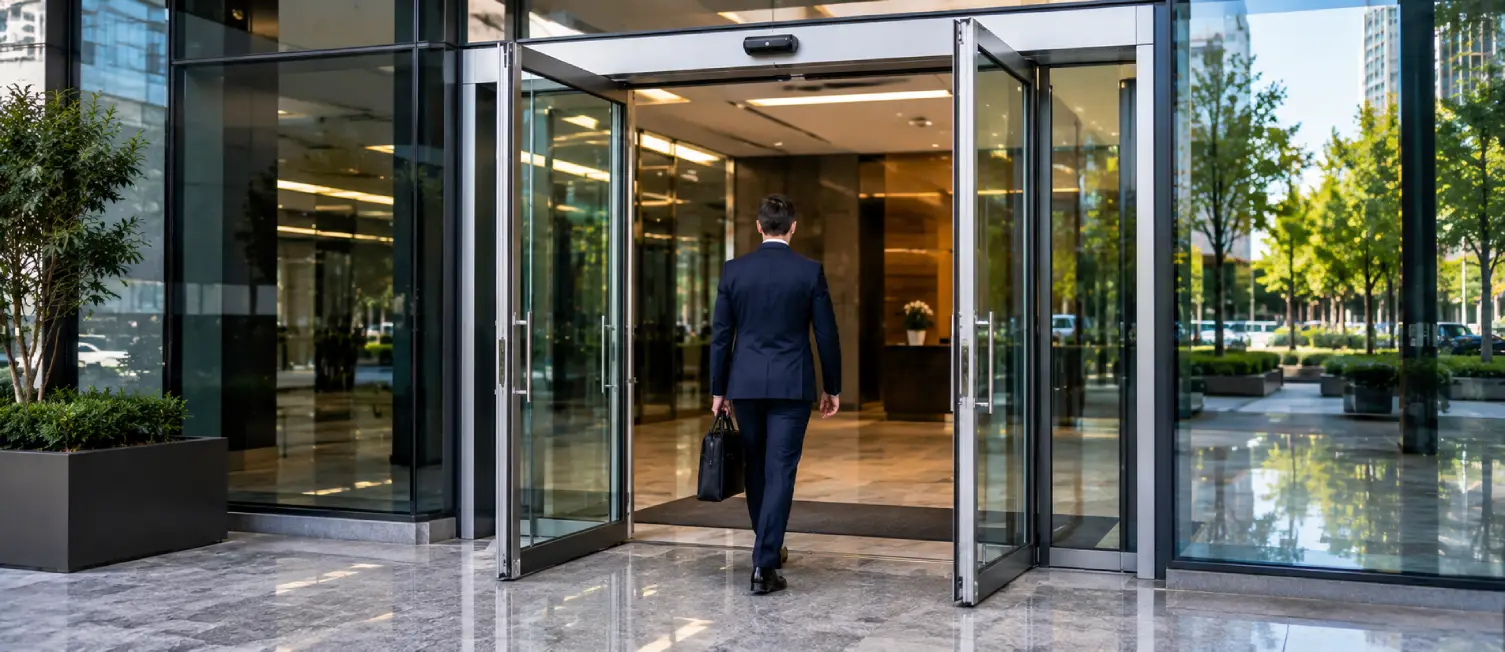
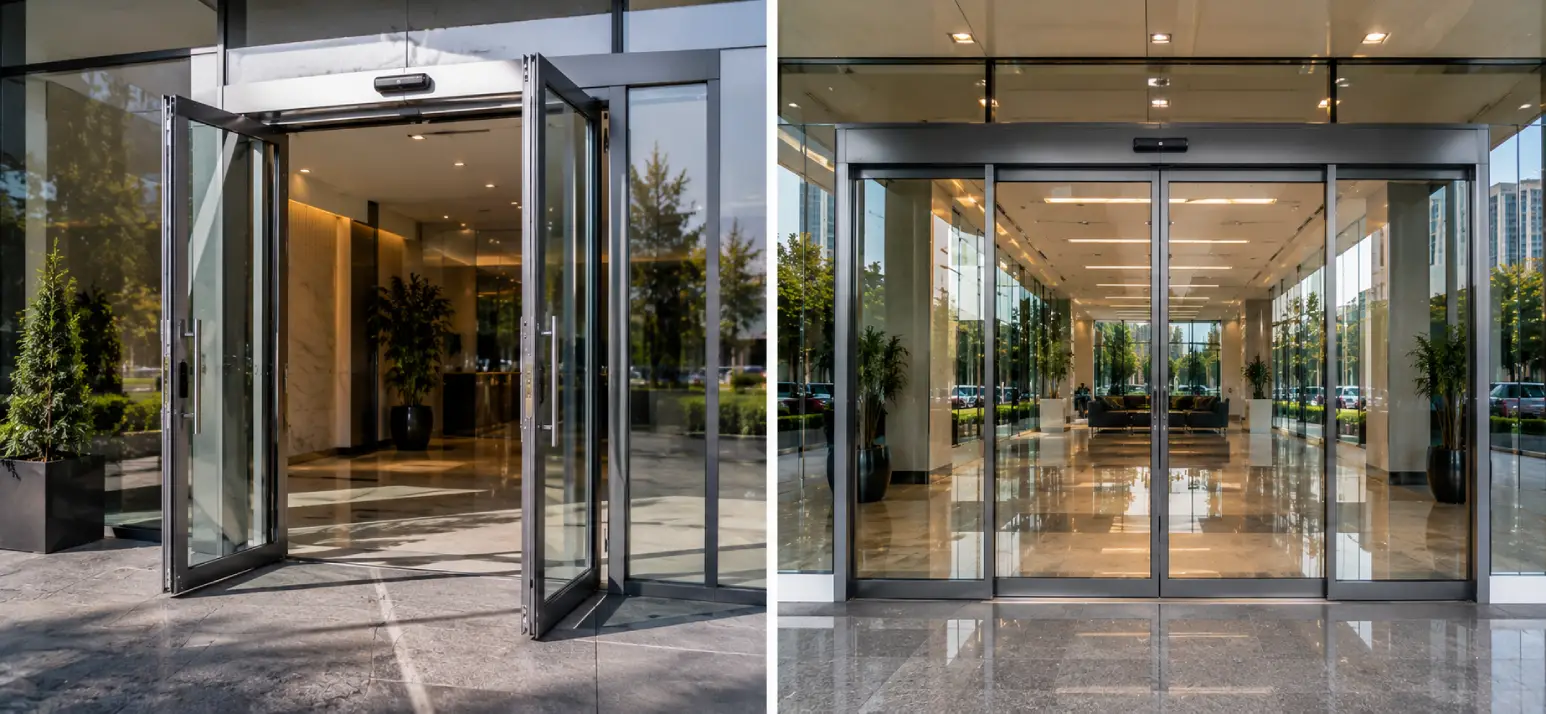
Automatic swing doors do what the name says. They swing open on a hinge, same as any regular door, but a small motor handles the work for you. Walk up, a sensor catches your movement, and the door swings open by itself.
You have probably walked through a dozen of these without noticing. Hospitals use them a lot. So do older shopping centers and government buildings. They have been around forever, and honestly, they are not going anywhere soon.
One thing people forget: these doors need room to swing. That space has to come from somewhere, usually one side of the entryway. If your building does not have much room to spare, this becomes a real problem fast.
There is more than one kind too. Some automatic swing doors only open one way. Others swing both directions, which hospitals like because staff push gurneys through constantly, from both sides, all day. A small office probably does not need that. A single-direction swing does the job just fine.
The motors have gotten better too. Old units used to clunk and groan every time they opened. New ones barely make a sound, and most let you adjust the speed so the door does not fly open and scare whoever’s walking through.
What About Sliding Doors?
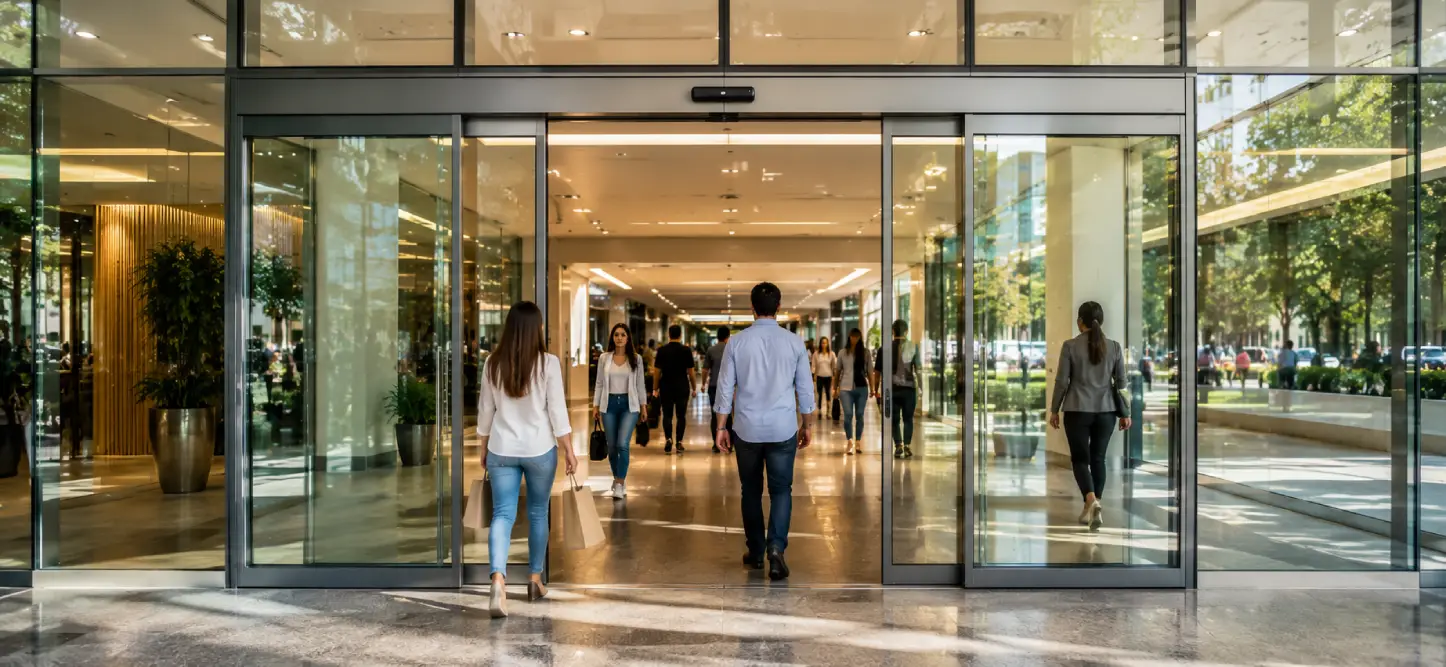
Sliding doors move side to side instead of swinging out. You have seen them at grocery stores, airports, and just about every mall built in the last twenty years. The panels glide along a track and tuck out of the way when someone walks up.
No swing space needed. No wasted floor room. Just a smooth side to side motion.
There is a reason these have taken over busy commercial spaces. We’ll get into why in a bit.
A few styles exist here too. Bi parting doors split in the middle, with each side sliding apart. Single slide doors only have one moving panel. Telescoping sliders stack a few panels together so you get a wider opening without needing a ton of extra track. Which one works for you comes down to how wide your entrance is and how many people move through it.
Most sliding doors use glass. Makes sense, since it lets people see what’s coming before they walk through. Nobody likes running into someone coming the other way.
The Differences That Actually Matter
Enough with the basics. This is what actually separates these two once you get past the spec sheet.
Space
Swing doors need room, plain and simple. Both indoors and out, depending on the swing direction. Got a narrow entryway? Furniture nearby? A reception desk in the way? That swing radius turns into a headache real quick.
Sliding doors skip this problem entirely. They slide flat against a wall or tuck into a pocket. Tight lobby? Sliding wins, no contest.
Handling Foot Traffic
Busy retail store or office? Sliding doors handle that traffic a lot better. People come and go in both directions without a door swinging into anyone’s face.
Automatic swing doors work fine when things are calm. But once foot traffic picks up, they slow things down. Two people trying to walk in and out at the same time? That’s exactly when automatic swing doors show their weak spot.
Accessibility
Both types can be ADA compliant when installed right. But sliding doors usually give you a wider path with nothing sticking out to block wheelchairs, strollers, or someone carrying boxes.
Swing doors work fine for accessibility too, as long as someone plans the swing space properly so it doesn’t turn into a hazard.
Weather and Sealing
This is where automatic swing doors pull ahead. They seal tighter, which means better protection against wind, rain, and temperature swings outside. Cold winters or brutal summers? That tight seal keeps your heating and cooling bills from creeping up.
Sliding doors, especially the older ones, let drafts sneak in through the track. Newer sliding models have gotten a lot better at this, but it’s still something to think about if energy costs matter to you.
Security
Swing doors usually lock tighter, thanks to how the hinge and frame fit together. Banks and offices that need serious security often lean this direction because of that extra lock strength.
Sliding doors can be secured well too. It just usually takes extra hardware or a smart lock system to get there.
Upkeep
Sliding doors have more parts moving at once. Tracks, rollers, belts, all working together. That means more things to check on regularly.
Swing doors keep it simple mechanically. Fewer parts means fewer things that can break down on you. Still, both need regular checkups if you want them lasting.
Noise
Nobody thinks about this until the doors are already in. Sliding doors run quieter since there is no actual swinging motion, just a steady glide. Swing doors can make more noise, especially older units, though newer motors have cut that down a lot.
If you are putting doors near a quiet office, a library, or patient rooms, this small thing might actually matter more than you’d expect.
Installing Them
Swing doors go in faster since the mechanism fits inside the existing frame. Less construction, shorter install time, lower upfront cost.
Sliding doors need a track built into the floor or overhead, plus wall space for the door to slide into. That is more construction, especially if you’re retrofitting an older building. Renovating instead of building fresh? Ask your contractor exactly how much structural work the sliding setup needs before you sign off on anything.
How Long They Last
Both hold up well with proper care. Swing doors, being simpler, often see less wear over time. Sliding doors, with rollers and tracks always in motion, might need parts replaced sooner, especially in spots with heavy daily traffic.
Neither one is weak. It just comes down to how hard they are being used and how often someone checks on them.
What Will This Cost You?
Let’s talk money, since that’s what actually decides most of these choices.
Automatic swing doors cost less going in. Simpler mechanism, cheaper materials, cheaper install. Maintenance stays lower too since there’s less to fix.
Sliding doors cost more upfront. The track, the sensors, the sliding mechanism, it all adds up. Maintenance runs a bit higher over the years because of all those moving parts.
But the twist is. Sliding doors often pay themselves back in busy commercial spots. Faster in, faster out, happier customers, smoother days. For a store that never slows down, that extra cost might be worth every penny.
We usually tell people to think in terms of years, not just the invoice they get after install. A cheaper door that needs more repairs down the line is not actually cheaper. Run the numbers over five years, not five months, and the picture usually gets a lot clearer.
So Which One Should You Pick?
Fair enough, you wanted a straight answer. Here it is.
Go with automatic swing doors if:
- Your space is on the smaller side and budget matters
- You deal with harsh weather and need a tight seal
- Security is a big deal for your building
- Foot traffic stays steady but never gets crazy
Go with sliding doors if:
- You run a high-traffic spot like a store, hospital, or airport
- Every inch of floor space counts
- Wheelchair and stroller access is a priority
- You want a cleaner, more modern entrance
Neither one wins outright. It comes down to what your building actually needs day to day. A small clinic with light, steady traffic does not need the same setup as a mall entrance packed with people all afternoon.
Small Details People Skip Over
A lot of people get so caught up in swing versus sliding that they miss the smaller stuff. Quick list:
- Sensor placement matters more than you’d think. Bad calibration means doors that open too early, too late, or not at all. Happens with both automatic swing doors and sliding doors.
- Ask about battery backup. Power cuts happen. You don’t want doors stuck shut, or stuck wide open, when the lights go out.
- Check your local building codes. Some cities have rules on door width, swing direction, and accessibility. Look into this before locking anything in.
- Climate plays a bigger role than most people realize. Live near the coast? Salt air chews through sliding door tracks faster than you’d guess.
Frequently Asked Question
- 1. Do automatic swing doors work outside?
Yes, most come rated for outdoor use with weatherproof sensors and sealed motors. Just double check with your installer that the specific model handles your climate.
2. What happens to sliding doors during a power outage?
Most commercial units have a manual override, letting people push the panels open by hand if the power drops. Confirm this before installation, especially if the building needs to stay accessible around the clock.
3. Which one costs less to keep running?
Swing doors, generally, thanks to the simpler mechanism. Sliding doors cost more over time because of the extra parts, but the traffic they handle can make up for it in busy spots.
4. Can I use both types in one building?
Sure can. Plenty of places use sliding doors at the main entrance for heavy traffic, then automatic swing doors on side or staff entrances where things stay quieter. Good way to balance cost and function.

Conclusion
Doors are not exciting. Nobody gets thrilled shopping for them. But they are the first thing anyone touches walking into your building, customers, patients, employees, everyone. A door that jams or swings into someone leaves a bad taste right from the start.
Both automatic swing doors and sliding doors get the job done well. The real trick is matching the right one to your space and how people actually move through it, instead of picking whatever looks best in a catalog.
We have put both types into all kinds of buildings, cramped retail corners, big open office lobbies, you name it. If we have learned anything, it’s that the “right” door depends entirely on where it’s going and who’s walking through it every day.
Still stuck deciding between automatic swing doors and sliding doors? That’s completely normal. Most of our clients start out unsure too. What actually helps is walking your space with someone who’s seen this exact decision play out plenty of times before.
That’s what we do at TwinPro Ventures. We’ll check out your building, your traffic, your budget, and help you land on a setup that actually fits. No pushy sales talk. Just honest advice from people who’ve done this a hundred times over.
Get in touch with TwinPro Ventures, and let’s figure out the right door for your space.