




Aluminium Window Maintenance Guide for Home and Commercial Buildings
Aluminium Window Maintenance Guide for Home and Commercial Buildings
Nobody wakes up on a Sunday excited to clean their windows. We get it.
However, for homeowners and employers with aluminium windows, it will save you lots of troubles down the road if you take care of them now and then, such as a shutter that won’t open or close or a puddle of water on the floor as soon as it rains heavily.
After years of fitting aluminium windows in homes, offices, and hospitals, we’ve learned a few things through experience. Money doesn’t determine the length of a window. Care does. We’ve installed windows that are 10 years old and they still run like a dream and we’ve installed windows that are 3 years old and they squeak, stick and leak – nobody touched these windows since the installation guys left.
So, consider this guide to be what we might say if we got a call from you. What to clean, how often, what to avoid touching your frames and when it’s better to simply pick up the phone.
Why aluminium window maintenance matters
A lot of people assume aluminium needs no care. It’s metal, after all. It won’t rot like wood, and it won’t sag in the summer heat the way cheap uPVC sometimes does.
Fair enough. The frame really is tough, and it can easily go thirty years.
The trouble is everything around the frame. Rubber gaskets, those furry brush strips, the tiny wheels under a sliding shutter, the locks, the hinges, the drain slots at the bottom. Dust gets in. Rubber dries out in the sun. Wheels wear down. And then one day you notice:
- the window jams halfway, or slips off its track
- rainwater sneaks in at the bottom corner
- Whenever strong winds blow, an annoying whistling sound starts coming through the window.
- the room is dustier and noisier than it used to be
the AC operates for a longer period of time than it should because cool air is continually leaving.
None of this comes easy and quickly. It creeps in slowly, which is exactly why regular aluminium window maintenance works so well. You catch the small stuff before it turns into a repair bill. It’s a lot like servicing your two wheeler. Miss one service and nothing happens. Ignore the fifth warning, and you might end up stranded on a scorching afternoon, wishing you’d taken the vehicle to the mechanic sooner.
A quick look at the parts
You don’t need any technical knowledge for this, but knowing what’s what makes the rest of the guide easier to follow.
- Frame: the fixed outer border set into your wall
- Shutter (or sash): the bit that actually moves
- Track: the groove a sliding shutter runs along
- Rollers: small wheels under the shutter
- Gaskets: rubber strips that hold the glass and close the gaps
- Brush seals: furry strips that keep dust and wind out
- Weep holes: little slots at the bottom of the frame that let rainwater drain outside
Then there’s the finish on the metal. Most windows have either powder coating, which is basically paint baked onto the metal, or anodising, a treatment that hardens the surface itself. Not sure which one you’ve got? Check your bill or ask whoever fitted them. If it was us, just call and we’ll tell you.
How often should you do aluminium window maintenance?
Honestly, it depends on where you live.
On a regular residential street, cleaning the frames and tracks once every three months and doing a proper check once a year is plenty. If you’re next to a main road, or there’s a building coming up next door, the dust never really stops, so clean the tracks every month.
Living near the sea is a different story. Salt in the air is the one thing aluminium really hates. Rinse the frames with plain water every month and give them a thorough check twice a year.
Offices, malls and taller buildings need a proper schedule, usually every quarter, with trained people doing the work.
And whatever your situation, do one full round after the monsoon. The rains leave mud and wet leaves in the tracks, and if you leave them there, they just sit and rot for months.
What you’ll need

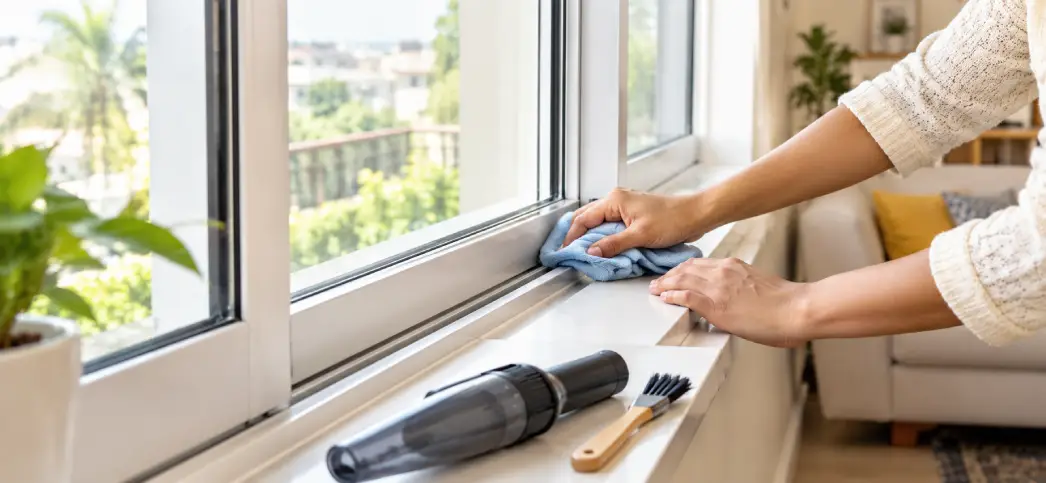
Good news first. Aluminium window maintenance doesn’t need fancy products, and you’ll find most of this lying around the house:
- a soft cloth or microfibre towel
- a soft brush (an old toothbrush is perfect for corners)
- a bucket of warm water with a few drops of dishwash liquid
- a vacuum cleaner with a thin nozzle
- a can of silicone lubricant spray from any hardware shop
- a thin wire or pipe cleaner
Now the stuff to keep away. Steel wool, scrub pads and rough cleaning powders will scratch the finish. Bleach, petrol, thinner and nail polish remover can eat into the coating. And please don’t point a pressure washer straight at the rubber seals. Once the coating wears through, the metal underneath starts to corrode, and that’s a lot harder to fix than a dirty window.
Step by step aluminium window maintenance routine
1. Vacuum the tracks before anything else
Don’t start with water. Seriously. Wet dust becomes mud, and mud in a window track is a nightmare to get out. Vacuum up the sand, dust and dead insects first, loosen anything stubborn with your brush, then vacuum once more.
2. Wash the frames
Dip the cloth in soapy water, squeeze most of it out and wipe the frames from top to bottom. Go easy. You’re cleaning a window, not scrubbing a burnt kadai after Sunday lunch. For marks that won’t budge, little circles with the soft brush usually do the trick. Wipe again with clean water and dry the frame with a microfibre cloth, or you’ll end up with water spots.
3. Do the glass
Any regular glass cleaner works, or soapy water and a squeegee if you have one. Just try not to spray strong cleaners right onto the rubber strips. Some of them dry rubber out over time, and dry rubber cracks.
4. Clear the weep holes (please don’t skip this one)
If we had to pick the one step people ignore, it’s this. And it’s behind most of the leak complaints we get.
Find the small slots at the bottom of the outer frame and gently push a pipe cleaner or thin wire through them. Then pour a small cup of water into the track and watch. It should drain out within a minute or so. If it just sits there, something’s still blocking it.
5. Look at the seals
Run your fingers along the rubber and the brush strips. You’re looking for rubber that has cracked, gone hard or shrunk away from the corners, and brush strips that have gone flat or patchy. Give them a wipe with a damp cloth. If they’re damaged, replace them. New seals don’t cost much, and you’ll notice the difference in dust and noise almost straight away.
6. Lubricate the moving parts
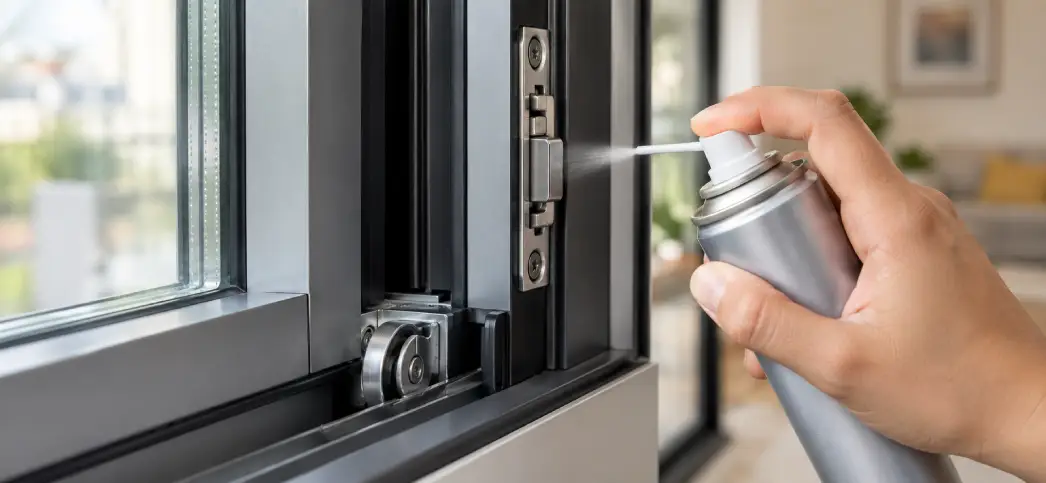
A light spray of silicone lubricant on the rollers, hinges, locks and handles, then open and shut the window a few times to work it in. Wipe off whatever’s left over.
Skip the coconut oil, engine oil and grease. We know it’s tempting. It feels smooth for about a week, then it grabs every bit of dust nearby and turns into black gunk. We’ve cleaned out more of those rollers than we’d like to admit.
7. Test it
Open, close and lock every window. It should slide without a fight and lock without you leaning on it. If a sliding shutter feels heavy or drags, the rollers are probably worn out or need adjusting.
Near the sea or a busy highway? Read this
The greatest cause of damage to aluminium windows is salt and pollution. Salt is deposited on the frame, draws water vapor from the ambient air and slowly diffuses underneath the coating. It is first observed as white powdery spots or small bubbles on the paint.
If so, wash the frames every couple of weeks with fresh water, especially after windy days and clean with mild soap once a month. Coat and examine 6 times a year and touch up painting as necessary to prevent water from entering through chips.
Building near the coast and haven’t put the windows in yet? Ask for a marine grade powder coat or a thicker anodised finish. It costs a little more upfront. You’ll be glad you spent it.
Aluminium window maintenance for commercial buildings
Commercial buildings are a whole different game. More windows, higher floors, and hundreds of people relying on them every day. A stuck window at home is annoying. A stuck window in a hospital ward or a server room is a genuine problem.
This is what we usually tell facility managers when they ask us about aluminium window maintenance for their buildings.
Write out a schedule. Cleaning every quarter, an inspection every six months and a full service once a year works for most buildings. Maintain a simple maintenance record of window(s) inspected and problems discovered and corrected. Over the course of a few months, you’ll begin to notice which are continuing to cause problems.
Do not use untrained individuals on floors above the ground floor. Harnesses, cradles or rope access must be used for facade cleaning needs. It’s not a safety plan, it’s just a tall ladder and a brave office boy.
Keep an eye on the silicone sealant, too. That sealant has a much longer life expectancy than most people think when using it on glass facades or large window walls, and over the years it gets damaged by the sun and heat. The handles, hinges and friction stays (the metal arms that hold a window open at an angle) also deteriorate more rapidly than at home, just because people use them, all day long.
If a window whistles on a windy day, heed the warning! That’s almost always a seal on its way out.
Is an annual maintenance contract worth it? For a bigger building, usually yes. You get regular visits, faster repairs and one team that answers for it.
Common problems and what to do
The window won’t slide properly
Nine times out of ten, it’s dirty tracks or worn rollers. Clean, lubricate, try again. Still stiff? The rollers likely need replacing.
Water gets in when it rains
Check the weep holes first. They’re usually the culprit. If clearing them doesn’t help, look at the seals and the sealant where the frame meets the wall.
Whistling or rattling in the wind
Worn or loose seals. Swap them out and the noise stops.
The lock won’t catch
The shutter has probably dropped slightly. A small roller or lock adjustment sorts it out, and it takes a technician a few minutes.
White spots or bubbles on the frame
That’s corrosion starting under the coating. Clean it and touch it up. If it’s spreading, get someone to look at it properly.
Fog between double glazed panes
The seal between the two glass layers has failed. No amount of cleaning will fix that one. You’ll need a new glass unit.
When to do it yourself and when to call someone
You can handle most aluminium window maintenance on your own. Cleaning, clearing weep holes and spraying a bit of lubricant are easy weekend jobs.
Where we would not replace, would be rollers, locks, hinges or seals. The same for any bent, cracked or badly corroded frame, any leaking frame that cannot be stopped after clearing the drainage, and any upper floor window where it is unsafe to reach. Commercial buildings that need proper service records fall in this group too.
And please, no window is worth a fall. If something feels risky, leave it to us.
Mistakes we keep seeing
- harsh chemicals because they “work faster”
- cooking oil or engine grease on the rollers
- ignoring weep holes until there’s water on the floor
- pressure washing straight into the seals
- painting aluminium frames with regular wall paint
- waiting for something to break before calling anyone
If you’ve done a couple of these, don’t feel bad. Most of our customers have too. Just start doing it the right way from your next clean.
A simple aluminium window maintenance checklist
Wipe the frames and glass and vacuum the tracks each month. Do wash frames near the sea or dusty road.
Deep clean the frames and tracks every three months, clear the weep holes and lubricate the rollers, hinges and locks.
Inspect seals and sealant annually, inspect coating for damage or corrosions and schedule annual hardware inspection.
Take a screen shot of it, put it on the refrigerator or send it to the person in charge of your building.
FAQ – Aluminium Window Maintenance
1. Can I use vinegar for aluminium window maintenance?
On glass, diluted vinegar is fine. On the frames, don’t make a habit of it. Acids can dull both anodised and powder coated finishes over time. Soap and water does a better job anyway.
2. How long do aluminium windows last?
Look after them and the frames can go 30 to 40 years. The seals and rollers won’t last that long, so expect to replace them somewhere along the way. How soon depends on how often you use the windows and what the weather’s like where you live.
3. Is aluminium window maintenance expensive?
Not really. Day to day care costs you some soap, a brush and a can of silicone spray. Even a professional service costs a fraction of what a new window would.
4. Can aluminium rust?
Not the way iron does. It can corrode, though, especially in salty or polluted air, which is why the coating matters so much.
5.Can aluminium windows be double glazed?
Yes, aluminium windows can be double glazed, and it’s very common.
Conclusion
At Twin Pro Ventures, we design, supply and install aluminium windows, glass facades and architectural glazing for homes and commercial buildings. And we don’t vanish once the installation’s done.
Our team handles aluminium window maintenance too, whether it’s a one time service visit or a yearly contract for an office, hospital, showroom or apartment complex. We’ll check every window, replace what’s worn, fix the leaks and get those shutters sliding the way they did on day one.
Got a window that’s stuck? A corner that leaks every monsoon? A building full of windows nobody’s looked at in years? Give us a call or drop us a message. We’ll come over, take a look and tell you honestly what needs doing, even if the answer is “this one you can fix yourself.”
Your windows have been looking after you all this while. Let Twinpro Ventures return the favour. Book your aluminium window maintenance visit with Twin Pro Ventures today.