


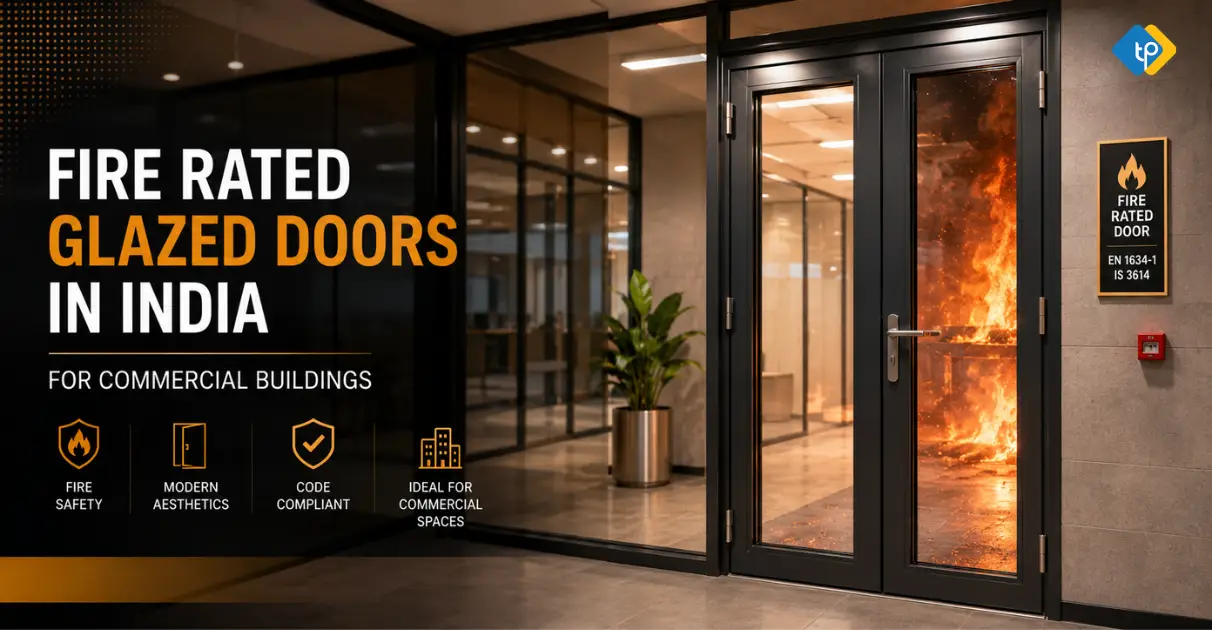
Fire Rated Glazed Doors in India for Commercial Buildings
Fire Rated Glazed Doors India: What Nobody Tells You About Your Building Safety (Until It’s Too Late)
The Moment When Safety Actually Matters
Last year, we got a call from a building manager in Bangalore. His office building was beautiful. 15 floors. Everything looked perfect. He’d just had a surprise safety check. And it almost went very wrong.
The inspector walked around. He stopped at the glass doors in the lobby. Then he asked one simple question: “Are these doors safe for fire?”
The building manager’s face went white.
Those glass doors? They looked exactly like normal doors. But they weren’t fire rated glazed doors India compliant. They were just regular glass doors. One more month of operation without fixing this, and the whole building could have been shut down. Heavy fines. Legal problems. Serious trouble.
That’s when we understood something important. Most building owners and architects don’t really get it. They don’t understand what makes a door actually fire-safe. They think it’s just an expensive piece of glass. They see the cost and say “no thanks.” They move on.
But here’s the real truth: fire rated glazed doors in India aren’t a luxury. They’re not something fancy you add because it looks nice. They’re the difference between safety and danger. They’re the difference between everyone going home safe or facing a disaster.
So let’s talk about this. We’ll explain what these doors actually are. Why India’s building laws now require them. What separates good doors from bad ones. And where you really need to put them in your building. We’ll talk like normal people. Not like we’re reading from a boring textbook.
What Are Fire Rated Glazed Doors India Actually Made Of?
Most people get this wrong. They think fire-rated doors are dark or special looking. Nope. They’re actually pretty simple when you understand what’s inside.
The glass looks normal. Clear. Transparent. You can see right through it. That’s the good part.
But inside? There’s something special. The glass has a special material mixed in. It’s called intumescent material. When it gets really hot during a fire, this material expands. Think of it like a sponge that puffs up. It creates a seal where gaps used to be. It blocks smoke and heat.
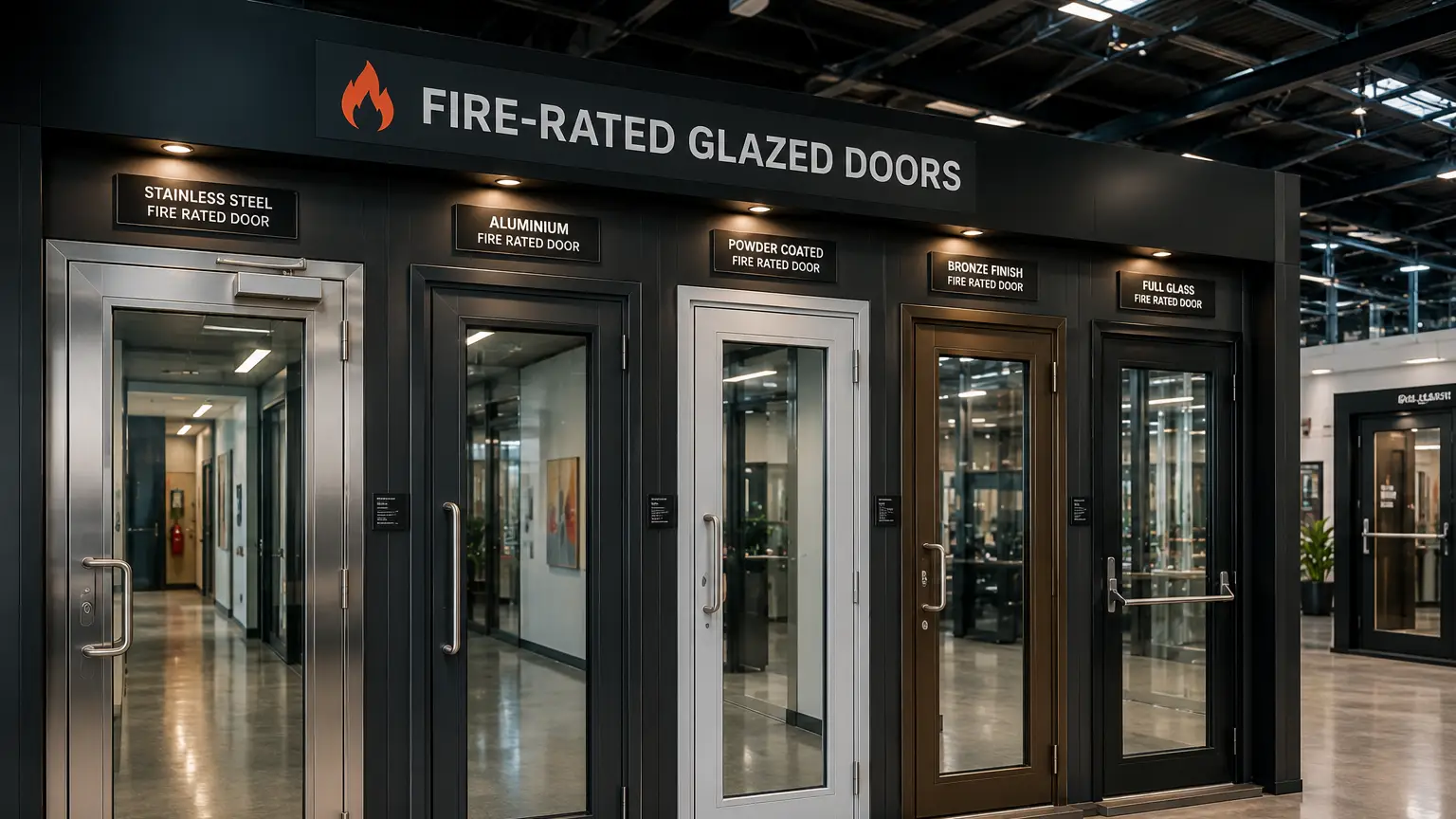
The frame around the glass? That’s made from stainless steel or special aluminum. These metals don’t bend or warp when they get hot. Regular aluminum melts or twists. Not this. It stays strong.
And the hinges, door handles, and closers? They’re all special too. They can handle extreme heat and keep working even in a fire.
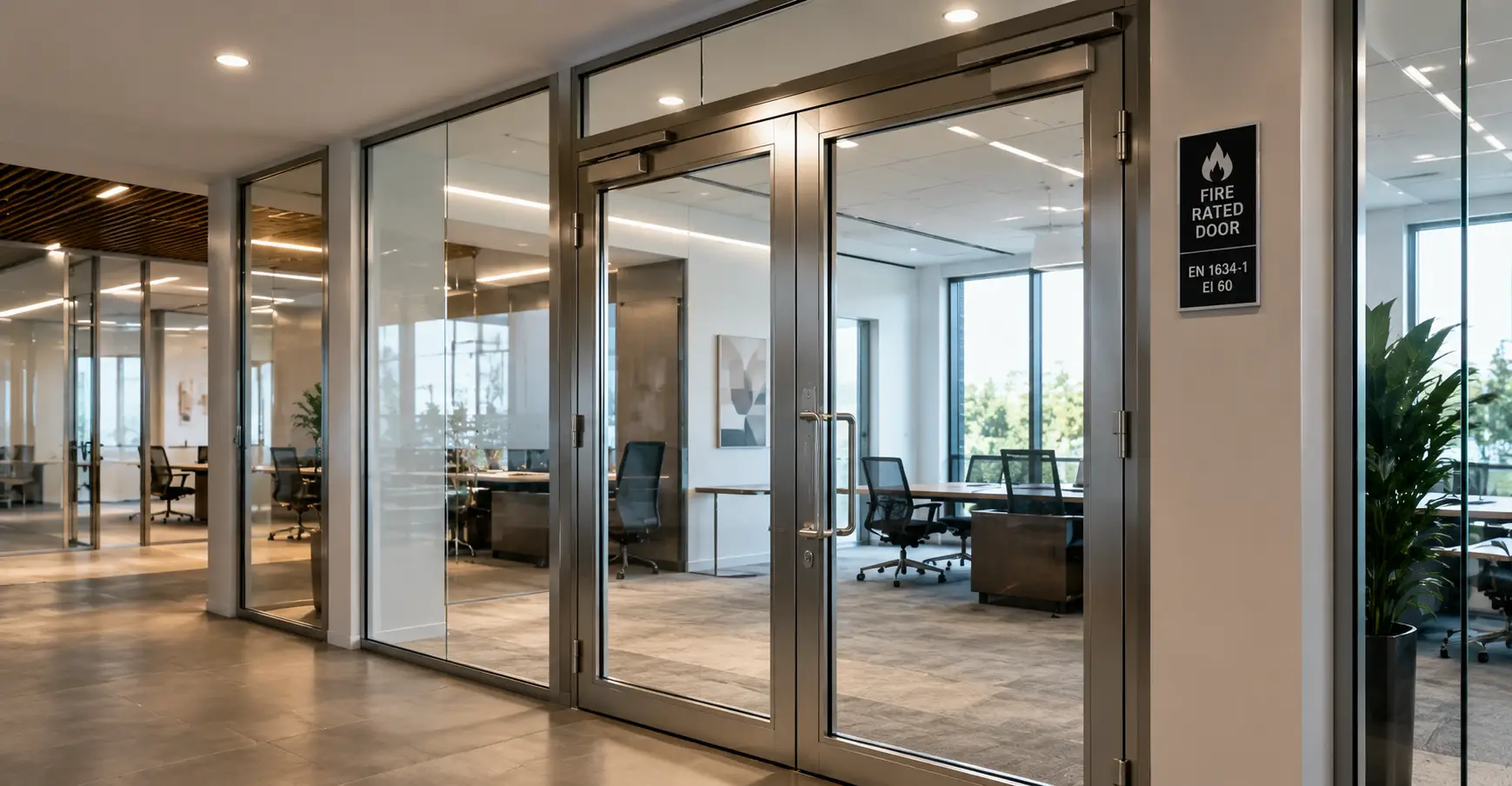
Here’s why this matters: you can still see through it. Your staff can see down the hallway. Architects can make beautiful buildings. Hospitals and hotels love these doors. You get a safety and design at the same time.
We’ve put in hundreds of these doors. People are always surprised. They look exactly like normal doors. The difference isn’t what you see. The differences are in the test results. The difference is what happens when there’s a real fire. A fire-rated door keeps its strength. A normal door doesn’t. It fails.
Why Your Building in India Absolutely Needs Them (And Why Insurance Companies Are Getting Serious About It)
Here’s the thing: India’s building rules are getting stricter. The National Building Code 2016 is the law now. And the government is actually checking if people follow it. Every year, they get more strict. Every year, they do more surprise inspections.
Money Problem: Insurance Gets Expensive
This is what we see happening. Insurance companies now ask questions. They want to know if your building has proper fire safety doors. If you don’t have them, your insurance doesn’t just go up a little bit. It goes way up. We had a client with a 10-floor building. His insurance went from ₹12 lakhs per year to ₹18 lakhs. That’s an extra ₹6 lakhs every single year. Why? Because, the lobby and stairwell doors weren’t the right kind.
Think about that. That’s ₹60 lakhs over 10 years. Just because of the wrong doors.
Inspectors are also coming more often now. If they find your doors aren’t safer, they can shut your building down. You pay big fines. You get legal problems. It’s serious.

The Really Scary Part: What Happens If There’s a Fire
Here’s what keeps building owners up at night. Imagine a real fire happens. The inspectors check. They see your doors weren’t safe. What happens then?
Your insurance company might say no. They won’t pay. You’re liable. People can sue you. A lot of people. That’s expensive. Really expensive.
We’ve talked to lawyers. They all say the same thing: proper safety doors are protects you. They’re not just for compliance. They protect you when things are going wrong.
Why This is Changing Now
Cities are growing. More people in buildings. Buildings are taller. When something goes really wrong, more people are at risk. That’s why the rules are getting much stricter. That’s why fire rated glazed doors India matter now more than ever.
Breaking Down the Technical Stuff – Fire Rated Glazed Doors India (And Why Each Part Actually Matters)
Let’s get into the specifications, but we’ll keep this practical rather than dry.
The Classification System That Controls Everything
| Classification | What It Actually Does | Real-World Application | Duration Range |
|---|---|---|---|
| E (Integrity) | Blocks flames and hot gases from crossing the door | Corridor separations, basic compartmentation | 30–120 minutes |
| EI (Integrity + Insulation) | Blocks flames AND keeps the opposite side cool (below 140°C) |
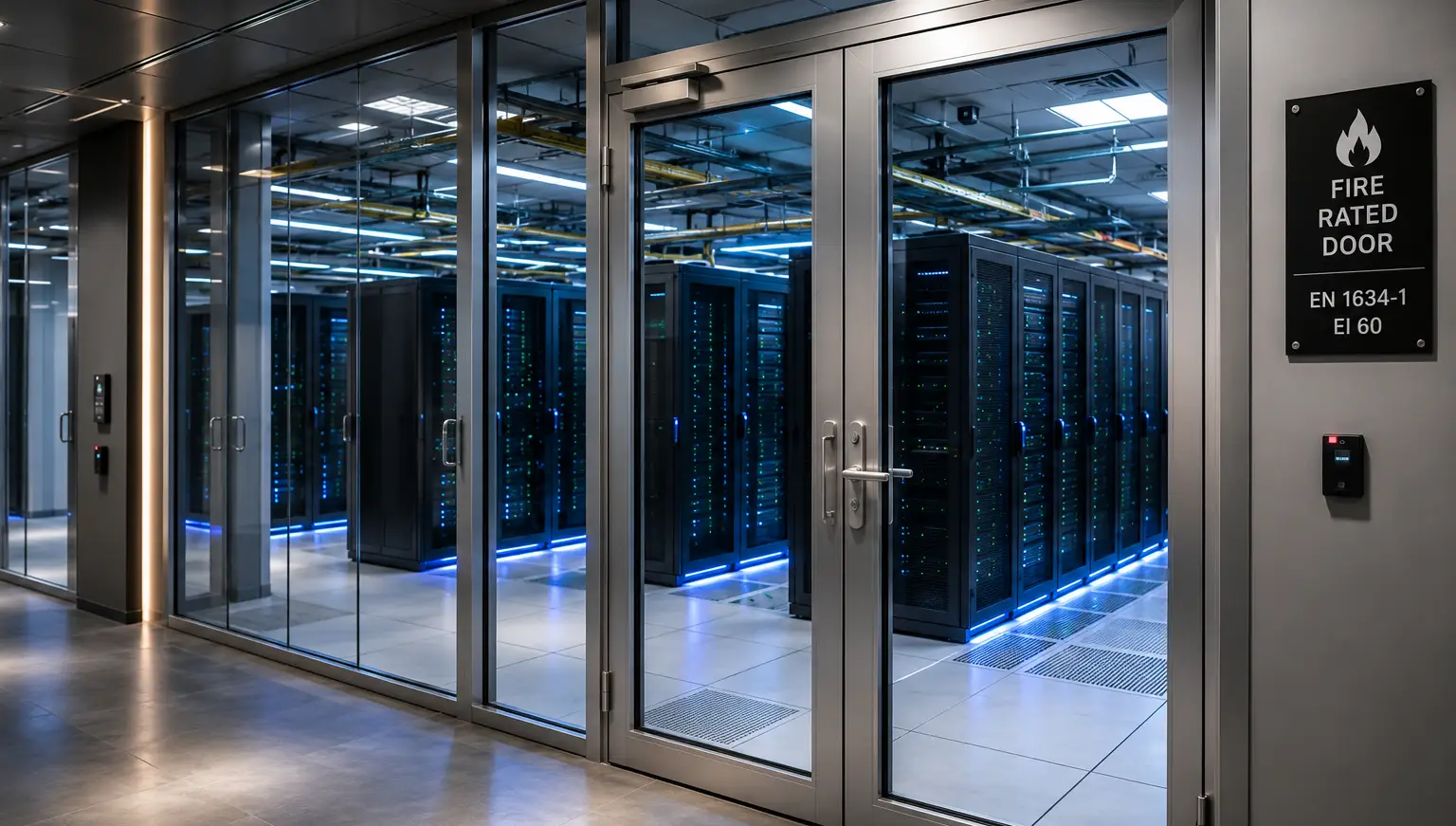
Critical zones, server rooms, lift lobbies | 30–120 minutes |
| EW (Radiation Protection) | Blocks flames, heat, and radiation exposure | High-risk areas, specialized applications | 30–120 minutes |
Here’s the practical difference:
An “E” rated door stops fire from moving through it. Your hallway on the other side might get hot, but flames won’t cross the threshold. That’s useful, but it has limits. An “EI” rated door does something smarter: it blocks fire AND prevents the other side from getting dangerously hot. Why does that matter? Because materials nearby won’t spontaneously ignite from radiant heat. It’s the difference between managing a fire and containing it completely.
The duration numbers represent how long doors maintain these properties during standard fire testing. A 60-minute door means it keeps its protective function for a full hour under extreme heat. A 120-minute door can handle twice that. For most office buildings, 60 minutes is sufficient. For data centers or pharmaceutical storage, 120 minutes is standard.
We typically recommend EI-rated doors because they provide comprehensive protection. And honestly, the price difference between E and EI isn’t substantial enough to justify compromising on performance.
The Frame and Hardware Components Nobody Thinks About (Until They Matter)
| Component | What It Must Be | Why Compromising Is Stupid |
|---|---|---|
| Outer Frame | Stainless steel, galvanized steel, or specialty aluminum | Cheap aluminum warps and buckles at high temperatures; your beautiful glass becomes useless |
| Sealing Materials | Intumescent compounds engineered to expand under heat | Regular sealants dry out and crack; fire spreads through gaps |
| Hinges | Heavy-duty ball-bearing, fire-rated specification | Standard hinges fail under stress; doors swing open and flames race through |
| Door Closer | Certified hydraulic or pneumatic with proper fire rating | Non-rated closers leak or fail; door won’t close automatically during fire |
| Glazing Gaskets | Fire-resistant rubber or silicone compounds | Regular gaskets melt; glass falls out of frames |
Here’s something we learned the hard way: we once specified quality glass with a cost-cutting frame. During inspection, the certifier flagged it immediately. The frame couldn’t maintain structural integrity under heat stress. We had to replace it—expensive lesson. The frame is genuinely as important as the glass.
Stainless steel frames cost more upfront, but they maintain their shape and structural integrity when exposed to extreme heat. Cheaper aluminum frames bend, buckle, and fail. Your premium glass becomes worthless if the frame can’t support it.
The hardware is equally critical. A door closer that leaks hydraulic fluid gradually fails. A hinge that’s not properly rated won’t bear the weight. These aren’t minor details—they’re the difference between a door that functions during an emergency and one that becomes a liability.
Testing Standards and Certifications – Fire Rated Glazed Doors India
We get asked this constantly: “How do I know if these doors are actually fire-rated?” Great question. Here’s what separates legitimate products from stuff that’s just labeled as fire-rated.
Indian Standards Your Doors Must Meet:
- IS 3614 – This is the Indian Standard specifically for fire-resistant doors. If your doors aren’t certified to this, they don’t comply with Indian regulations. Period.
- National Building Code (NBC) 2016 – This is the actual law governing what’s acceptable in Indian buildings. It references IS 3614 extensively.
International Benchmarks That Add Credibility:
- BS 476 (British Standard) – Used by premium manufacturers for additional validation beyond Indian standards
- EN 1634-1 (European Standard) – European fire testing methodology; indicates rigorous testing approach
- UL (Underwriters Laboratories) – American standard; CBRI certification in India validates compliance with UL standards
What Actually Happens During Testing:
Manufacturers don’t just slap a label on doors. The testing process is genuinely rigorous. They build sample doors identical to what you’ll install, then expose them to:
- Standard fire conditions reaching specific temperatures over defined timeframes
- Pressure differentials mimicking real fire scenarios (flames push against doors differently in real fires)
- Hose stream applications after fire exposure to verify structural integrity
We always ask for physical test reports rather than just certificates. A report shows actual data—temperature curves, failure points, performance margins. That transparency tells you exactly what you’re purchasing.
Here’s our recommendation: When sourcing doors, request three specific items:
- Physical Test Reports (not just certificates—actual test data)
- Certifire or UL Labels (third-party verification)
- Local CBRI Certificates (India’s Central Building Research Institute validation)
A manufacturer unwilling to provide complete documentation? That’s a red flag. Walk away. Legitimate manufacturers have this stuff readily available- Fire Rated Glazed Doors India
Where These Doors Actually Need to Go in Your Building
Based on years of installations, here’s what the code requires and what we’ve learned actually works in practice.
Stairwell Lobbies and Emergency Exit Pathways
These are your building’s escape routes, and they’re where fire rated glazed doors prove their value most dramatically. When you install one here, you’re compartmentalizing fire while maintaining sightlines. People can see whether the stairwell ahead is safe. Additionally, these doors prevent fire from racing through lobbies during evacuation, buying occupants critical extra seconds.
We installed doors in a 12-floor office complex’s stairwell lobbies last year. During the final inspection, the auditor specifically mentioned that visibility through the glass doors would prevent panicked decisions during evacuation. That detail—transparency during emergencies—saves lives.
Lift Lobbies and Corridor Separations
Elevators create natural vertical pathways for fire in buildings. Flames can travel floor-to-floor through lift shafts. Fire-rated doors surrounding lift lobbies prevent this vertical spread. Furthermore, they maintain sightlines, allowing security teams to monitor activity while keeping protection intact.
We’ve designed several lift lobby separations. The consistent feedback from building managers: occupants barely notice the doors are there until you point them out. They look like standard glass. That’s the whole point.
Server Rooms and Data Centers
These spaces generate intense heat during normal operation. Equipment fires burn hot. We typically specify 120-minute EI-rated doors for server rooms because equipment fires demand extended protection. The doors allow IT staff to assess problems through glass while maintaining complete fire compartmentation. We had one data center manager tell us the glass doors gave him peace of mind—he could literally see his equipment during emergencies without opening fire barriers- Fire Rated Glazed Doors India
Large Open Spaces Requiring Transparent Compartmentation
Modern offices favor open layouts. Building codes still require compartmentation. Fire-rated glazed doors solve this elegantly. They divide large office spaces, hotel corridors, and hospital wings while preserving the open aesthetic architects prefer. We’ve designed several high-end hotel renovations where these doors became architectural features—beautiful and safe simultaneously – Fire Rated Glazed Doors India
The Indian Manufacturers Actually Worth Your Time
We have worked with several manufacturers over the past years. Some are genuinely reliable. Others? Let’s just say we have learned to be selective.
The Ones We Actually Recommend
Shakti Hormann – They’ve been consistent on our projects. CBRI-certified documentation arrives without hassle. UL recognition is legitimate. Technical teams respond quickly when questions come up. Their 30 to 120-minutes ratings cover most commercial requirements. We specify them regularly, and they delivered.
Vetrotech India – They focus specifically on high-performance glazing. EI-class ratings are their specialty. Custom sizing doesn’t compromise certification—that’s rare. Their technical documentations are comprehensive without being overwhelmed. Architects appreciate their ability to handle custom designs while maintaining certification for Fire Rated Glazed Doors India
AIS Asahi India Glass – Premium option. Their fire-resistant glass technology paired with aluminum or steel frames creates visually sophisticated solutions. We have used them on hospitality projects where design matters alongside safety. They perform exceptionally well in high-end applications.
Acodor – Mid-range option with flexibility. Mineral-wool insulated doors alongside glazed options. Custom sizing available. Tested to Indian and British standards. Their pricing is accessible for budget-conscious projects without sacrificing certification integrities.
What We Actually Tell Clients to Request
When you contact manufacturers, don’t settle for glossy brochures. Request:
- Physical Test Reports – Actual performance data, not just a marketing materials
- Certifire or UL Labels – Evidence of third-party verification
- Local CBRI Certificates – India-specific compliance documentation
A manufacturer hesitant to provide this? Move on. Legitimate manufacturers have these documents readily available and are proud share to them.
Installation and Maintenance: The Part That Determines If Your Doors Actually Work for Fire Rated Glazed Doors India
Here’s something critical: purchasing quality doors is only half the equation. Installation and maintenance determine whether they actually protect you when needed for Fire Rated Glazed Doors India.
Installation Reality Check:
| Phase | What Actually Happens | Why It Matters |
|---|---|---|
| Pre-Installation | Verify frame dimensions match openings exactly; inspect glass for transport damage |
Even millimeter discrepancies create gaps; damaged glass fails during fire testing |
| Frame Setting | Ensure frames sit perfectly plumb and square; use fire-rated sealants throughout |
Slight misalignment creates smoke pathways; regular sealants fail under heat |
| Hardware Installation | Calibrate door closers; verify hinges distribute weight evenly |
Improper calibration prevents automatic closure; doors swing open during fire |
| Sealing | Apply intumescent sealants around entire frame perimeter | These expand during fires, blocking gaps that flames would otherwise exploit |
| Final Testing | Conduct functionality tests; verify automatic closure works | Catches installation issues before occupancy; prevents surprises later |
We once observed an installation where the contractor skipped proper sealing around the frame. The glass and hinges were perfect, but smoke pathways exist around frame edges. We caught it during inspection and had them redo it. That attention to detail separates professional installations from mediocre ones.
Maintenance Schedule Reality:
Quarterly inspections catch problems early. We check door closer function, hinge alignment, any visible damage to glazing or frames. We’ve seen buildings where maintenance teams missed warning signs, worn hinges preventing proper closure, corroded frames beginning to warp, sealant degradation.
Annual professional servicing keeps everything optimized. These inspection cost far less than emergency replacements and create documentation for compliance audits. Building managers who maintain their fire-rated doors rarely face compliance issues.
Real Costs and Real ROI- Fire Rated Glazed Doors India (Not the Sugar-Coated Version)
Let’s talk about money, because it’s usually the deciding factor.
What You’ll Actually Spend:
- Standard Office Corridors (30-60 minutes, EI-class): ₹15,000 to ₹25,000 per door
- Critical Zones (120-minutes, EI-class): ₹25,000 to ₹40,000 per door
- Custom Oversized Installations: ₹40,000 to ₹65,000+ per door
These prices reflect actual certification, quality frames, proper hardware, and professional installation. We’ve seen cheaper options—they always lack proper documentation or don’t meet their current standards.
Where the Money Actually Returns:
Insurance premium reductions often offset installation costs within 2-3 years. We’ve calculated that most medium-sized commercial buildings recover their investment through insurance savings alone within three to five years. Additionally, building certification like IGBC require verified fire compartmentation, which affects property valuation positively.
Liability protection is harder to quantify but genuinely valuable. One fire incident in a non-compliant building could cost exponentially more than the doors ever will. We have consulted with building owners who faced insurance claim denials and legal complications—costs that make door installation look like a bargain.
The uncomfortable truth: cheap door cost more in the long run. We’ve never seen a building owner regret investing in the quality doors. We’ve seen plenty of regret trying to cut corners.
Frequently Asked Questions- Fire Rated Glazed Doors India
Q1: Can I Just Use Regular Glazed Doors in My Building?
Technically, maybe you’ll pass initial inspections. Probably not long-term. NBC 2016 mandates specific areas require fire-rated installations. If a fire occurs and investigation reveals non-compliant doors, your insurance claim becomes complicated. We always recommend compliance and it costs less than potential consequences and provides genuine occupant protection-Fire Rated Glazed Doors India
Q2: Do These Doors Look Different From Standard Ones?
Nope. Modern fire-rated doors are looking virtually identical to standard ones. Glass appears the same. Frame designs reflect contemporary architectural styles. We have installed doors that nobody notices until we specifically point them out. The difference exists only in testing data and internal composition.
Q3: What’s the Actual Difference Between E, EI, and EW?
“E” stops flames from crossing. “EI” stops flames AND limits temperature rise on the opposite side (below 140°C). “EW” adds radiation protection. For most commercial buildings, EI provides sufficient protection. We recommend EI-class doors for virtually all applications unless your specific risk assessment suggests otherwise.
Q4: How Long These Doors Actually Last?
With proper maintenance, quality fire-rated doors last 15-20 years. Glass doesn’t degrade. Mechanical components like hinges and door closers eventually wear. We recommend replacing these components every 8-10 years during routine servicing rather than replacing entire doors. That’s the cost-effective approach.
Q5: Are Fire-Rated Glazed Doors More Expensive Than Solid Fire Doors?
Initially, yes—typically 20-30% more than solid steel doors. However, they provide visibility that solid doors don’t. For applications where visibility matters (hospital corridors, hotel lobbies), fire-rated glazed doors are the only compliant option. The premium reflects genuinely superior functionality rather than just a safety certification upgrade.
Making the Decision: Moving Your Building Forward
Here’s what we’ve learned from countless conversations with building owners, managers, and architects: most people overthink this decision. They assume it’s complicated. It’s really not.
You assess your building’s requirements based on NBC 2016 guidelines. You consult with certified manufacturers or building specialists. You verify certifications thoroughly. You invest in proper installation and maintenance. That’s it.
The result? Peace of mind. Once everything’s properly certified and installed, you stop worrying about compliance and focus on operations. That psychological relief is worth the investment.
We’ve guided numerous building owners through this process. The consistent feedback: relief. Real relief. Not just relief from compliance stress, but genuine confidence that their buildings are protected.
If you’re managing a commercial property, planning renovation, or designing new construction, fire rated glazed doors India deserve serious consideration. They provide compartmentation that modern codes require, they integrate beautifully into contemporary designs, and they genuinely protect occupants and property.
The path forward is straightforward. Don’t overthink it. Invest in proper solutions, document everything, and maintain regularly. Your building, your occupants, and your liability exposure will thank you- Fire Rated Glazed Doors India
For detailed specifications and our recommended solutions, check out [our fire-rated glazed doors product page]. For location-specific information and services, explore Fire rated glazed doors in Coimbatore, Fire rated glazed doors in Chennai and Fire rated glazed doors in Bangalore
To understand our complete service offerings, visit Twinpro Ventures.
For regulatory guidance, refer to the National Building Code and CBRI fire safety testing standards. For building sustainability standards, check IGBC guidelines.