


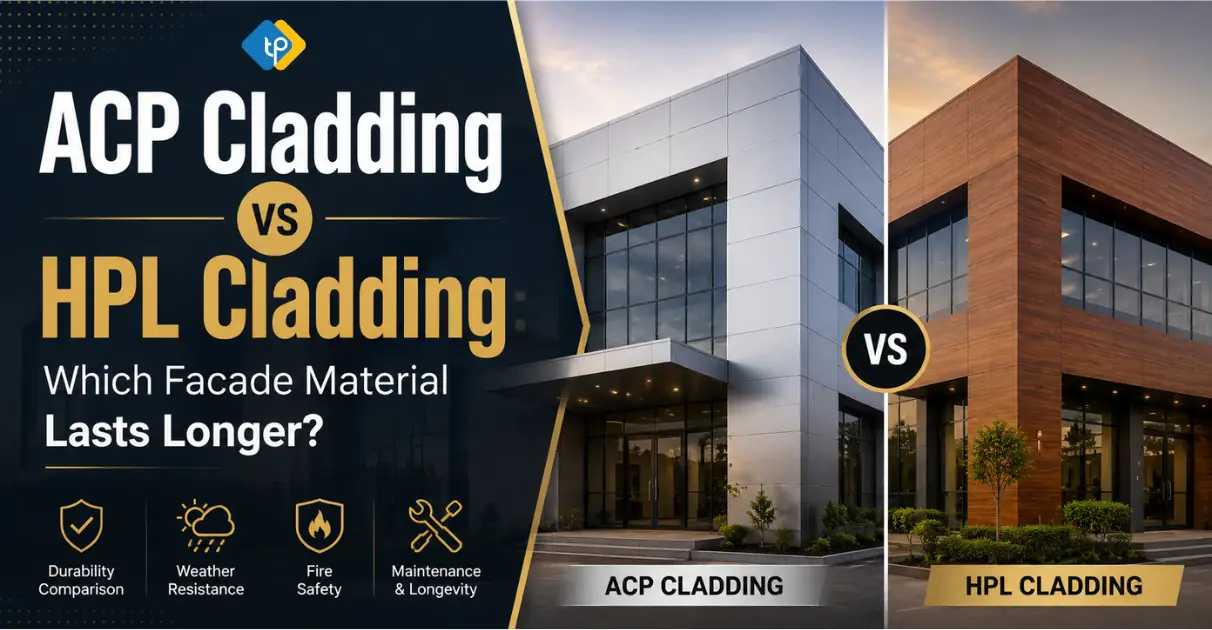
ACP Cladding vs HPL Cladding: Which Facade Material Lasts Longer?
ACP Cladding vs HPL Cladding: Which Facade Material Lasts Longer?
Ask any architect in Coimbatore this question and watch them pause for a second. ACP cladding vs HPL cladding, which one actually survives 15-20 years on a real building, not a brochure? It’s a bigger call than people think. The facade is the first thing anyone sees, and it’s also the first thing the weather goes after.
We hear this question at TwinPro Ventures almost every week. Clients show up with a beautiful mood board, but nobody’s mood board shows what that panel looks like after five straight monsoons. So let’s talk plainly. ACP cladding vs HPL cladding, no sales pitch, just what actually happens over time.
What Are We Even Talking About Here?
Quick basics first, so we’re on the same page before we get into the ACP cladding vs HPL cladding comparison properly.
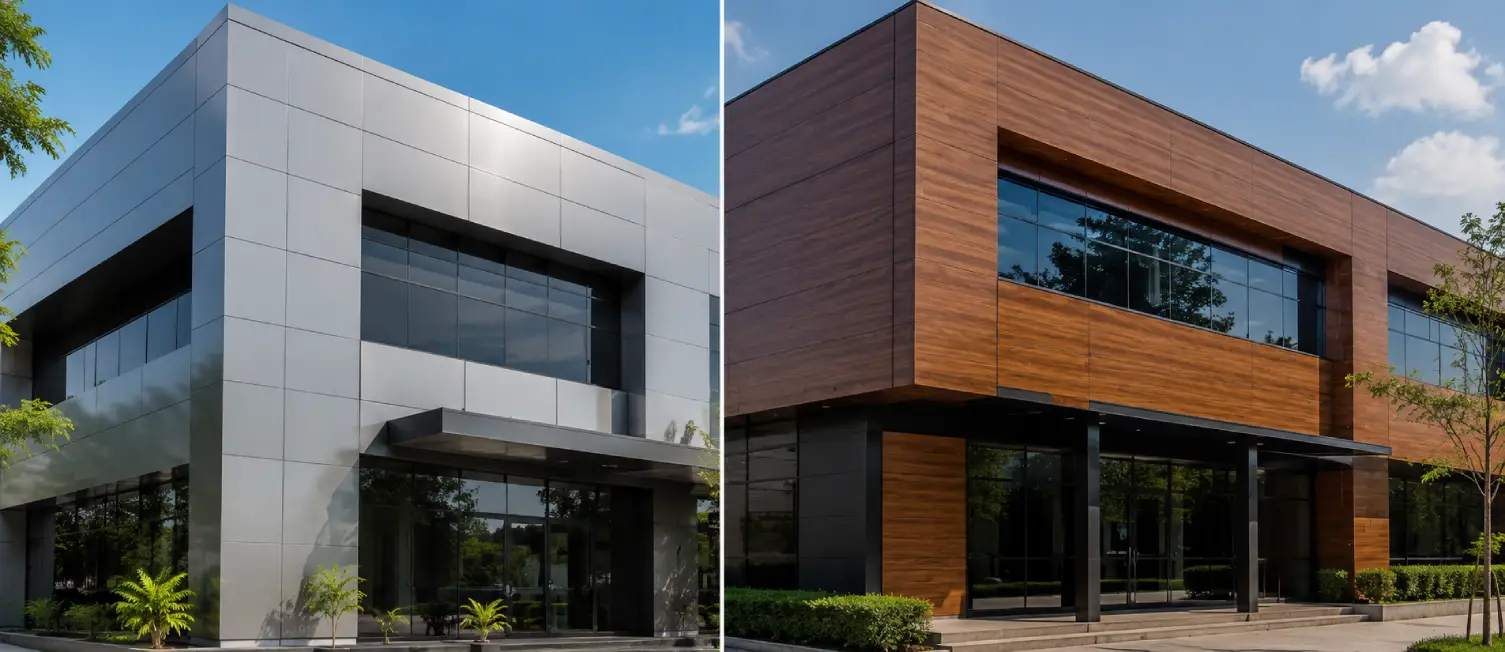
ACP, or Aluminium Composite Panel, is two thin sheets of aluminium with a core sandwiched in between, usually plastic or a fire safe mineral filling. It’s light. It’s easy to shape. And it comes in more colours than you’d ever need. Most signage boards and a good chunk of Coimbatore’s commercial buildings use it for exactly these reasons.
HPL, or High Pressure Laminate, is layers of resin-soaked paper pressed hard under heat until it turns into a solid board. It’s heavier than ACP, and it feels more like a slab than a panel. You’ll spot it more on schools, offices, and buildings going for a textured look instead of a shiny metallic one.
Both count as solid facade cladding materials, and both are everywhere in Tamil Nadu right now. Both look sharp the day they go up. The real story only comes out years later, once the sun and rain have had their say. Nobody remembers what a facade looked like on inauguration day, they remember what it looks like five years on.
Round One: Heat
Coimbatore summers don’t mess around. We’re talking 38°C plus, and any wall facing west or south gets cooked for hours with barely any shade.
- ACP handles surface heat fine, since aluminium itself doesn’t mind the sun. But a cheap core underneath can soften or bulge after a few years of that punishment. The edges start peeling apart, a problem called delamination.
- HPL takes heat more evenly across the whole board. There’s no separate layer to peel away, so it tends to hold its shape better, longer.
HPL wins round one, but only if you’re comparing good ACP to good HPL. A solid, well-made ACP panel installed properly can easily out-survive a bargain-bin HPL board.
Round Two: Rain and Humidity
This is where ACP cladding vs HPL cladding gets personal for anyone building in South India. Our humidity doesn’t play nice with exposed surfaces.
- ACP, sealed properly at every edge, handles water fine, since aluminium doesn’t soak up moisture. The core is the soft spot though. Let water sneak in through a bad seal, and the core swells up.
- HPL is water-resistant all the way through, since resin-soaked layers don’t drink water the way plain wood or MDF does.
Honestly, both do fine here if installed right. And that’s the catch most people miss: nearly every facade failure we’ve seen in Coimbatore wasn’t a material problem at all. It was bad sealing, wrong fasteners, or someone skipping the expansion gaps. Fix the installation, and both materials shrug off our humidity for well over a decade.
Round Three: Fire
This one deserves more attention than it usually gets, especially after India tightened fire safety rules a few years back.
Plain polyethylene core ACP is genuinely dangerous in a fire. It burns fast and drips molten material, which is the last thing you want on a tall building. Fire rated ACP, the FR version, is the only one that should ever touch a commercial or multi-storey project.
HPL is naturally denser and doesn’t behave the same way when things go wrong, though fire rated HPL still beats the standard grade by a good margin.
Bottom line: whichever material you pick, ask for the fire rated version. We won’t spec anything else at TwinPro Ventures for commercial work, and your contractor shouldn’t either.
Round Four: Colour and Sun Fade
Nobody wants a building that looks worn out after two years.
ACP comes in finishes ranging from basic coated to PVDF, a premium coating that can hold its colour for 15-20 years. Skip that and go cheap, and the colour fades within 3-4 years flat. You’ve probably seen it already, those older buildings around town with dull, patchy panels that used to look brand new.
HPL tends to stay colour stable longer, since the pigment runs right through the material instead of sitting on top as a coating.
So HPL edges ahead here too, but a good PVDF coated ACP panel closes that gap pretty well. This round’s closer than people assume.
Round Five: Upkeep
Nobody asks about this before construction, but everybody complains about it five years in.
Looking after ACP:
- Wipe it down with mild soap and water every few months
- Check the sealant joints every year, this one’s not optional
- Keep an eye out for warping near AC units or anything else giving off heat
Looking after HPL:
- Same basic cleaning, and the surface resists scratches a bit better
- Warping is rarer since it’s one solid board, not layered like ACP
- Sealing still matters, just not quite as critical
HPL is genuinely the lower maintenance option long term. That’s part of why architects reach for it on buildings that won’t get regular attention, warehouses, factory sheds, anywhere nobody’s checking the panels every few months. If your building has a facility team walking the perimeter monthly, ACP’s small extra upkeep barely registers. If nobody’s checking, HPL quietly does you a favour.
Round Six: Weight and How Easy It Is to Install
This bit rarely makes it into any brochure, but it changes your project directly.
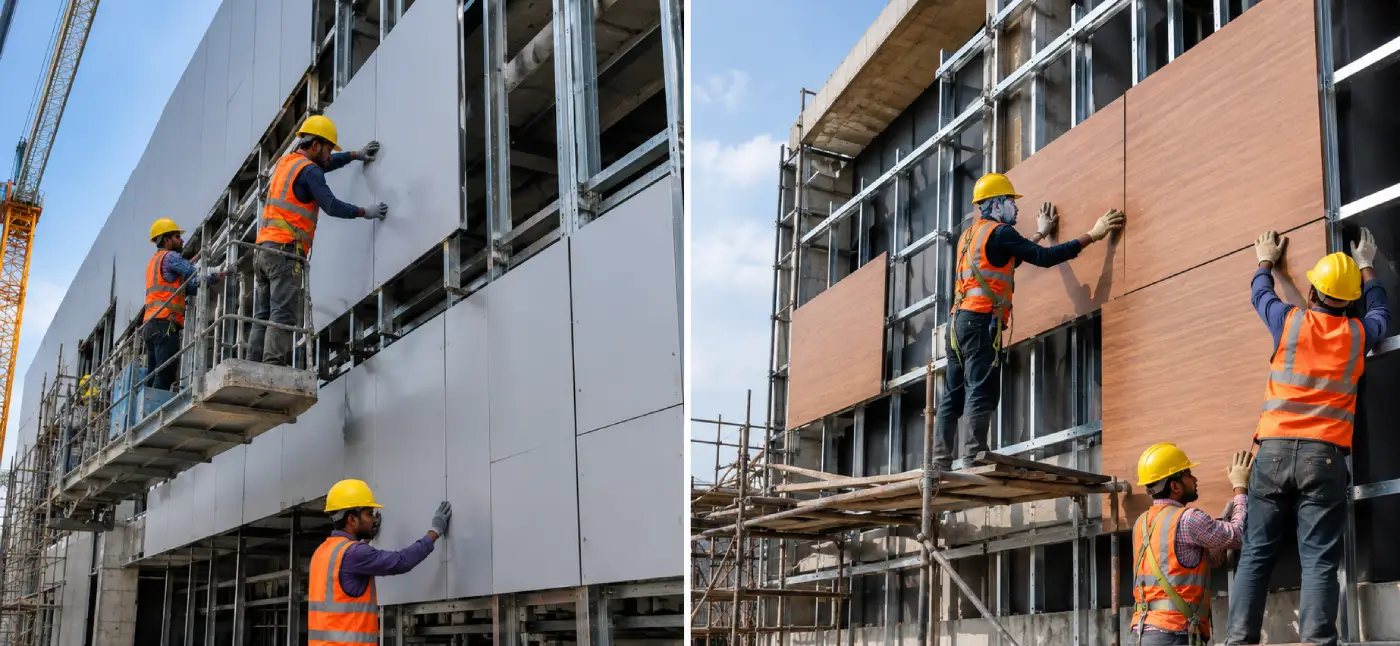
ACP is much lighter than HPL. Lighter means faster installation, less strain on the structure holding it up, and lower labour costs. It also bends more easily, so if your architect’s drawn curves, wraps, or anything geometric, ACP is usually the friendlier material to work with.
HPL is heavier and stiffer. It needs a stronger frame underneath and generally takes more time to install. What you get in return is a facade that shrugs off bumps and impact better, which actually matters at street level where vehicles or people can knock into it.
Curved, architectural design? ACP wins easily. Flat panels on a straightforward wall? HPL’s extra toughness starts to matter more.
Round Seven: Coastal vs Inland
Tamil Nadu isn’t one climate, it’s several stitched together. Coimbatore sits inland with dry heat and dust, while places like Chennai or Tuticorin deal with salty sea air that eats through metal much faster.
ACP near the coast needs a better grade of aluminium and a solid protective coating, or the salt will pit and discolour it faster than you’d expect. HPL doesn’t have a metal surface for salt to attack in the first place, so it holds up noticeably better along the coast.
For Coimbatore specifically, this round barely matters since we’re not dealing with sea spray. But if you’re reading this for a coastal project, keep it in mind. The ACP cladding vs HPL cladding decision genuinely shifts depending on where your building actually sits.
Round Eight: Warranty, and What It Actually Covers
Read the fine print before signing off on either one.
Decent ACP suppliers usually offer 10-15 year warranties on PVDF coated panels, but that typically only covers fading and peeling, not anything to do with installation. HPL makers offer something similar, often around 10 years, again limited strictly to manufacturing defects.
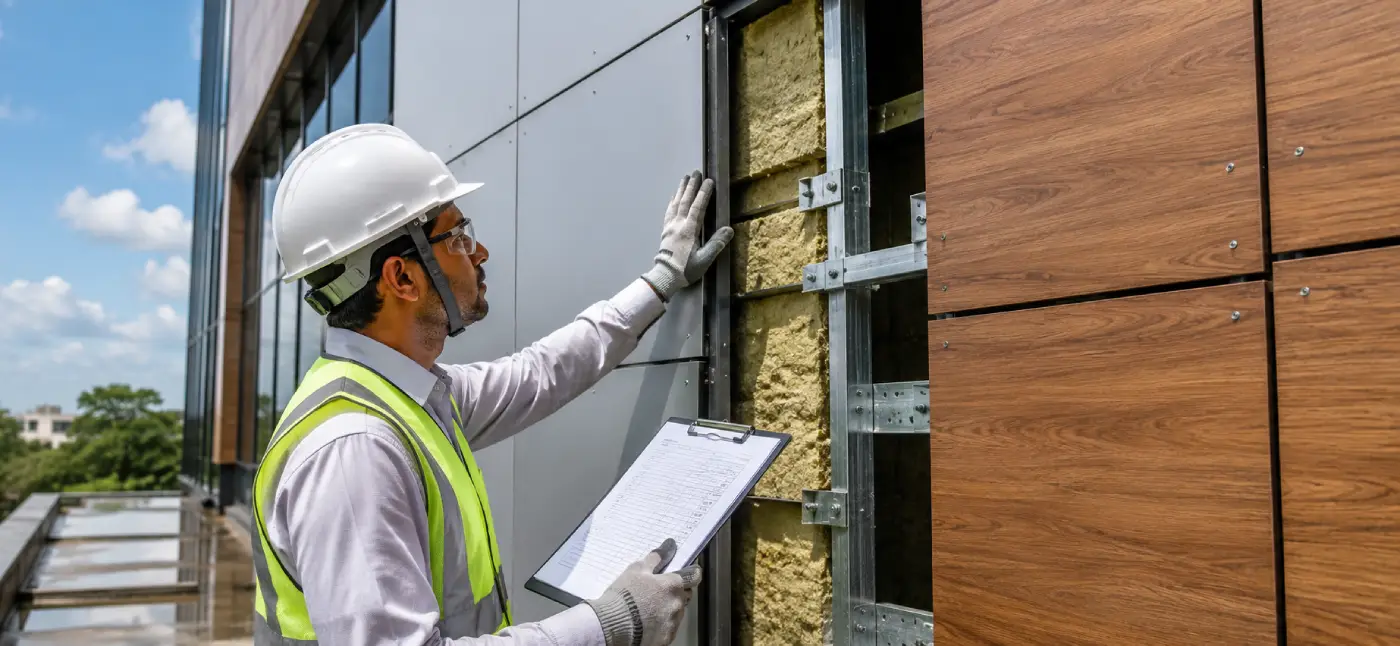
The part that catches people out: a manufacturer’s warranty is worthless if your installer skipped the expansion gaps or used the wrong screws. Keep the material warranty and the workmanship guarantee separate, and get both in writing before a single panel goes up.
So, Which One Actually Lasts Longer?
Straight answer, no dodging it: quality for quality, HPL wins on raw longevity, especially somewhere as hot and sunny as Coimbatore. It resists warping better, holds its colour longer, and has no layers that can come apart.
But this is the real twist. A fire rated, PVDF coated ACP panel, put up correctly by people who actually know the material, will easily last 15 plus years too. We’ve seen ACP facades from ten years back around Coimbatore that still look great, purely because the grade was right and the installation was done properly from day one.
So the honest answer to ACP cladding vs HPL cladding isn’t “one material always wins.” It’s closer to this: one forgives mistakes better than the other. HPL forgives average installation. ACP rewards good installation with a lighter, cheaper, more flexible facade.
Quick Guide If You’re Still Deciding
Still torn between ACP cladding vs HPL cladding?
The short version.
- Go with ACP if: budget’s tight, you want more colours to pick from, or your design has curves and shapes that need bending.
- Go with HPL if: your building takes heavy direct sun, you want less maintenance long term, or colour staying put matters more than upfront cost.
- Non negotiable either way: fire-rated cores, proper sealing at every joint, and a contractor who’s actually installed this material before, not someone practising on your building.
Let’s Talk Cost, Since It Always Comes Up
ACP usually costs less per square foot than HPL, sometimes by a decent margin depending on the grade. Over a large facade, that gap adds up fast, often into lakhs on a mid sized commercial job. HPL costs more upfront, but you may end up spending less on repairs down the road, since it stands up better to years of sun and impact.
Do the math over 15 years, not just the first quote. That’s where the real comparison between these facade cladding materials plays out. A cheaper facade that needs partial replacement in year eight isn’t actually the cheaper choice once you factor in labour, scaffolding, and the mess of redoing work on a running building.
Frequently Asked Questions – ACP Cladding vs HPL Cladding
- 1. Can we mix both on one building?
Yes, and people do it often. HPL goes on ground floor, high traffic areas for the impact resistance, ACP goes up top for the lighter weight and design freedom.
2. Does colour choice change how long it lasts?
Darker shades soak up more heat and can fade or expand a touch faster, on both materials. Going dark? Ask specifically about heat resistant grades.
3. How do we check if a panel is actually fire-rated?
Ask for the fire test certificate, not just someone’s word on it. A real FR core ACP panel or fire rated HPL board comes with paperwork you can actually verify.
4. What are the disadvantages of HPL?
It costs more upfront and weighs more, so installation takes longer and needs a stronger frame underneath. It also doesn’t bend easily, so curved or fancy shapes are tough to pull off with it.
5. What ACP cladding is used for?
People use it for building facades, signboards, and shop fronts since it’s light and easy to shape into curves. It’s also common on false ceilings and partition walls indoors.
Conclusion – ACP Cladding vs HPL Cladding
This is genuinely the conversation we have with every client before a facade goes up. Soil conditions, structural warranties, IS standard compliance, we work through all of it before ordering a single panel, because a facade that fails in year six ends up costing way more than getting it right in year one.
Still stuck comparing ACP cladding vs HPL cladding for your own project? Don’t guess your way through it. Send us your site details, your budget, and which way your facade faces, and we’ll tell you plainly which material makes sense for your building, not just which one photographs well.
Talk to TwinPro Ventures before locking in your facade material. We’ve built enough around Coimbatore to know exactly where ACP and HPL each earn their spot, and we’d rather tell you the truth now than get a call about a warped panel three years from now. A ten minute conversation with us upfront saves a lot more than that down the line.