



10 Mistakes to Avoid While Choosing Glass Railing for Homes and Offices
10 Mistakes to Avoid While Choosing Glass Railing for Homes and Offices
Glass railings look good. No question there. A plain staircase turns into something people actually notice once you swap in glass. But this is the thing nobody tells you upfront: most people make at least one or two glass railing design mistakes without even knowing it. The railing looks fine for a while. Then it wobbles, or stains, or just feels off for the room it’s in.
We have installed enough of these across homes and offices in Coimbatore to know where it usually goes wrong. Some glass railing design mistakes are obvious once someone points them out. Others hide for months, sometimes years, before they show up.
So This is the full list of glass railing design mistakes, in plain terms, so you can skip every one of them.
1. Picking Glass Thickness Without Thinking About Load
This is the big one. Probably the most common of all the glass railing design mistakes people make, and the one with the most at stake.
This is what happens: people assume glass is glass. A balcony railing at home does not need the same strength as a railing in an office corridor where a hundred people walk past it every day. Get the thickness wrong, and you are not just looking at a wobbly rail. You are looking at a real safety problem.
Rough guide we go by:
- 10mm to 12mm toughened glass for home balconies and quiet terraces
- 12mm to 15mm for busy spaces, offices, malls, anywhere with heavy foot traffic
- Get an actual structural engineer to check the load, not just whoever’s selling you the glass
Skip this step and the railing looks perfectly fine on day one. Give it two years, though, and that is exactly when this kind of mistake shows itself.
2. Going Frameless Without Knowing What It Really Takes
A frameless glass railing looks amazing, honestly. No visible brackets, no clutter, just glass holding itself up. That clean look is exactly why people want it.
This is what they miss, however: a frameless glass railing requires more substantial glass, a significantly deeper base mounting and much more careful engineering. It is chosen because it is good looking in photographs, rather than because they know what is keeping it up under the cap.
If a contractor says they will install a frameless glass railing and doesn’t mention base channel depth or structural support, there’s more to ask.
If a contractor pitches you a frameless glass railing and never mentions base channel depth or structural support, ask more questions. That is usually where this glass railing design mistake starts, in the sales pitch, not the workshop.
We have seen frameless railings that have held up for ten years without a single issue. We have also seen ones start creaking within six months. The difference always comes down to whether someone actually engineered the base fixing properly, or just installed it and hoped for the best.
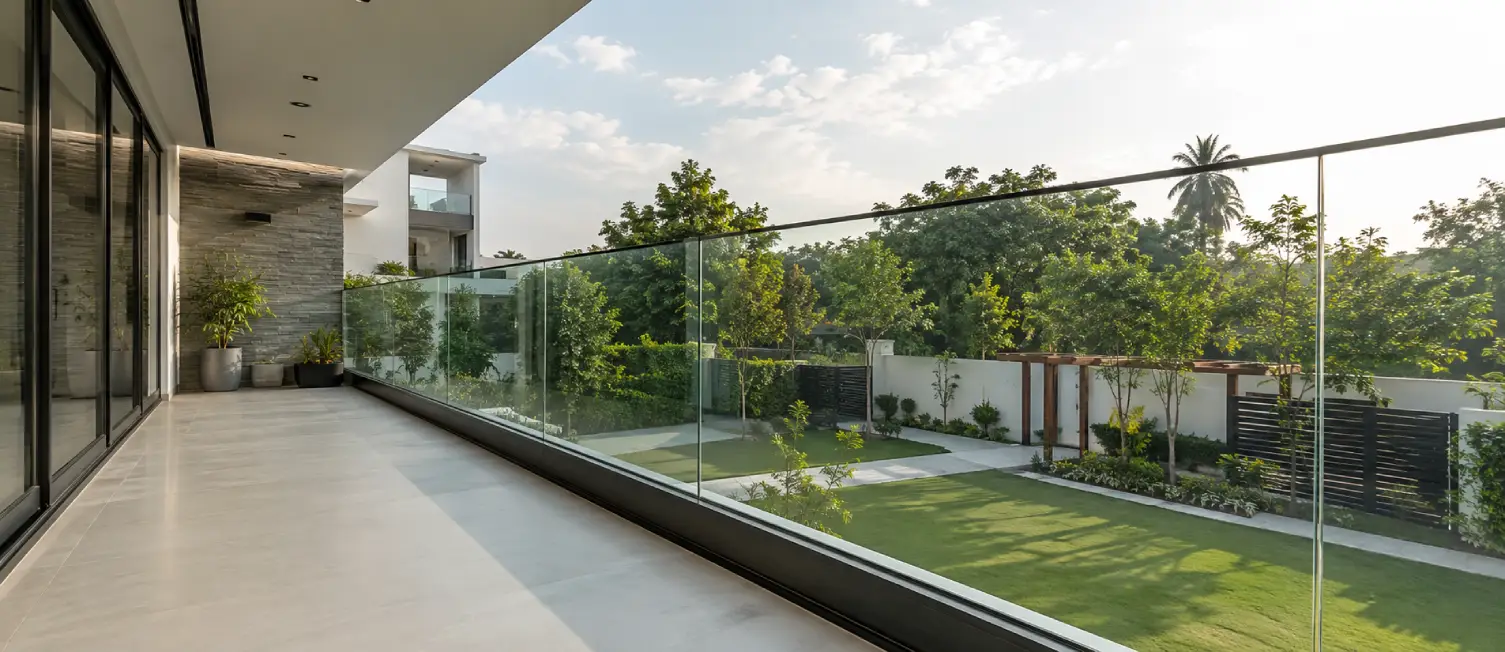
3. Not Knowing Toughened Glass From Laminated Glass
We receive this question almost every week! What is the actual difference and which one should I choose?
Yes, it matters. Quite a lot indeed!
- Toughened Glass shatters in small blunt fragments if it does break. It’s the common option for most homes and it’s not bad most of the time.
- Laminated glass is made with a layer (or two in some cases) sandwiched between the two pieces of glass that holds it together even if it is cracked. If it breaks it doesn’t fall apart on you, in other words.
If you have got kids at home, or you are on a higher floor, laminated glass is the safer call, even though it costs a little more. Picking the wrong one is one of the glass railing design mistakes you might not notice until something actually breaks, which is a rough time to learn a lesson.
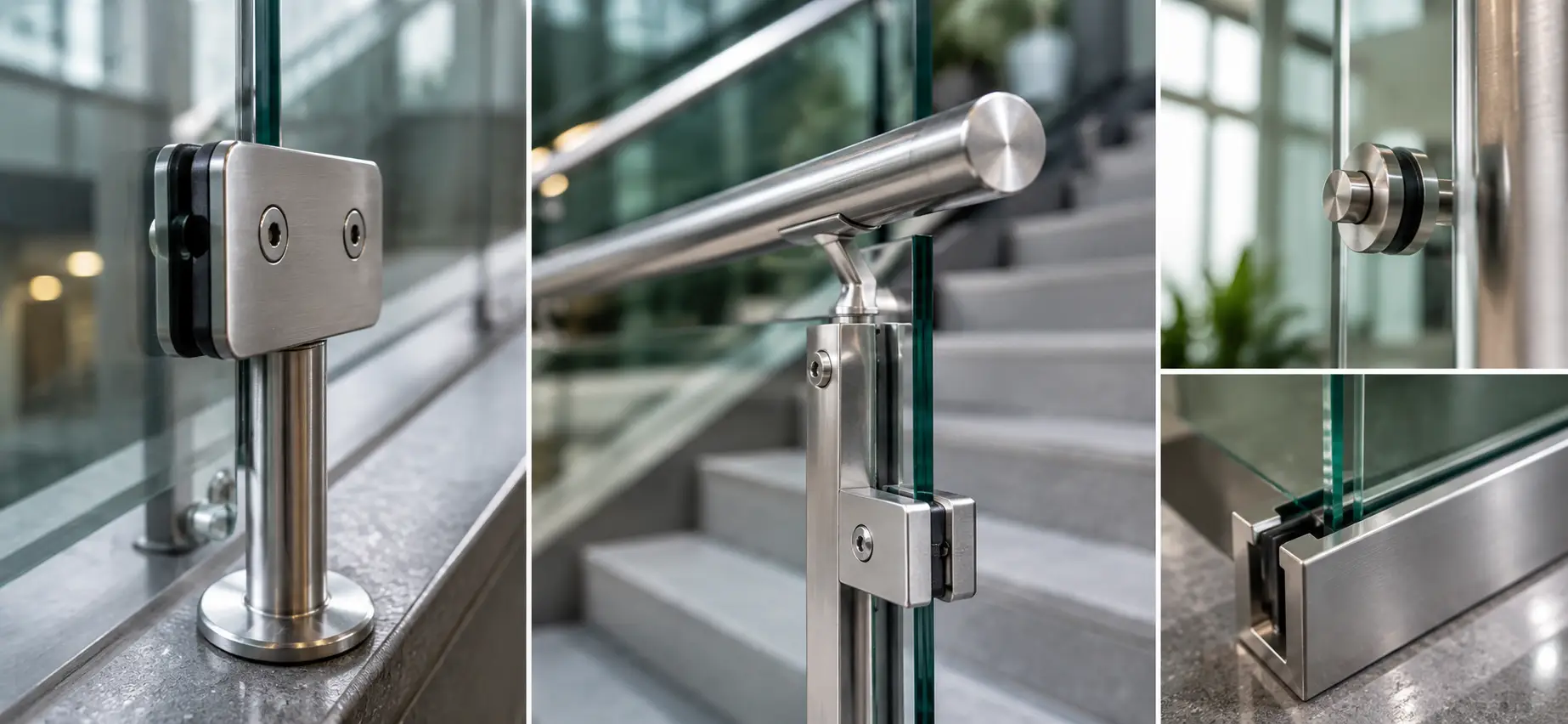
4. Not Paying Enough Attention to the Hardware
People spend hours picking the glass. Almost nobody spends five minutes thinking about the clamps and brackets holding it up.
Cheap hardware rusts. It loosens over time. And in a humid place like Coimbatore, especially through monsoon season, low grade metal does not last.
What actually works:
- Stainless steel, 304 or 316 grade depending on how exposed it is to weather
- Anti corrosion coating if it’s outdoors or semi outdoors
- Hardware rated specifically for your glass thickness, not just should work
A gorgeous glass panel held up by weak hardware is still one of the glass railing design mistakes we see most often. Nobody notices the hardware in photos. Everyone notices it once it fails.
5. Skipping IS Codes and Safety Standards
Okay, this one is a bit dry, but stick with me because it is genuinely important.
India has real standards for this stuff, IS 2553 among them, covering glass thickness, railing height, and how much load it can safely take. A lot of local vendors just wing it based on this is what usually works, which isn’t the same thing as tested and approved.
This is not acceptable for anything that people actually touch, sit on or push against every day, like a railing.
When considering different glass railing designs, simply ask yourself does this fit for this area? If the response is not clear, press a bit harder before proceeding with any approval.
6. Getting the Handrail Height Wrong
A glass railing with the wrong handrail height is not a small detail. It’s a real problem, and you only notice it the moment you actually lean against it.
Homes usually sit around 900mm to 1000mm. Commercial spaces need more, closer to 1050mm to 1100mm, depending on the local code. Some people go lower than that chasing a sleeker floating look, especially up high or near stairwells, and that is exactly where this becomes dangerous.
This is one of those glass railing design mistakes that stays invisible right up until someone leans on the railing and it just feels wrong.
7. Forgetting That Glass Needs Maintenance
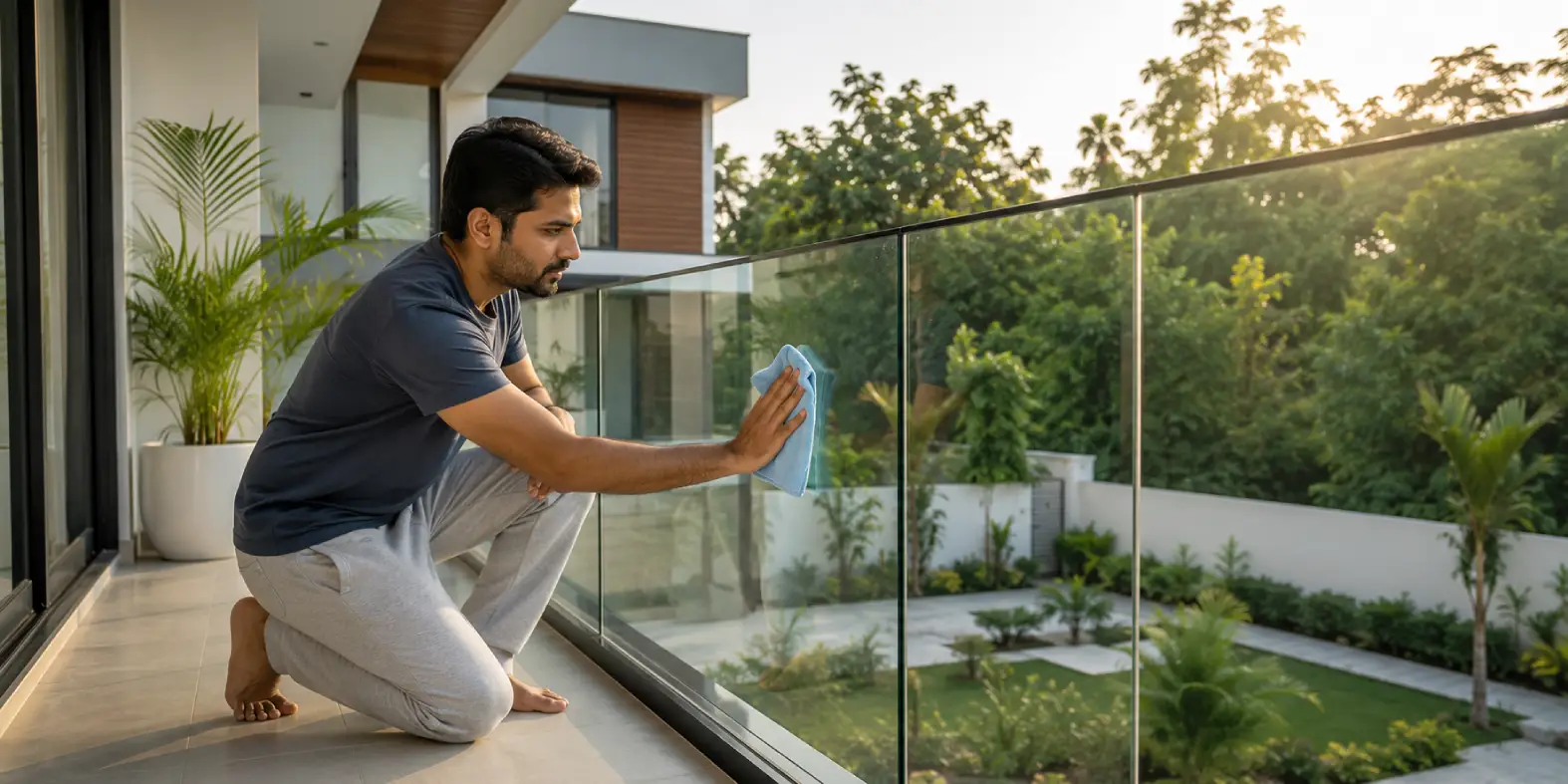
Glass shows everything. Fingerprints, water marks, dust, all of it, all the time.
Go for a super glossy, crystal clear finish in a busy office or a home full of kids and pets, and you will be cleaning it constantly. Most people do not think about this until after the railing’s installed, and by then it’s too late to change.
A few things that help:
- Frosted or lightly tinted glass hides smudges way better than clear glass
- Anti fingerprint coating exists, and it is worth the small extra spend
- Ask about easy clean treatments before installation, not after
This is one of the quieter glass railing design mistakes. It does not show up on day one. It shows up every week when you are wiping the same railing down again.
8. Choosing the Wrong Finish for the Space
Clear glass is not always the right call, even if it is the default option everyone reaches for.
- A busy office corridor might need frosted or etched glass for a bit of privacy between cabins
- A sun facing balcony might need some tint to cut the glare
- A boardroom might suit a subtle pattern more than plain transparency
Picking a finish just because it looks premium in a sample, without thinking about how the space actually gets used, is one of those smaller glass railing design mistakes that still ends up bugging you daily.
9. Ignoring the Edges
The edges of a glass panel take more abuse than people expect, from cleaning, from bumps, from just being touched constantly.
Poorly polished edges chip easily. They look unfinished no matter how good the glass looks otherwise. A properly polished edge, flat, beveled, or rounded, holds up for years instead of months.
This detail gets skipped a lot because you cannot really see it in a photo or a sample. It is one of the smaller glass railing design mistakes, but it is the difference between a railing that ages well and one that looks tired within a year.
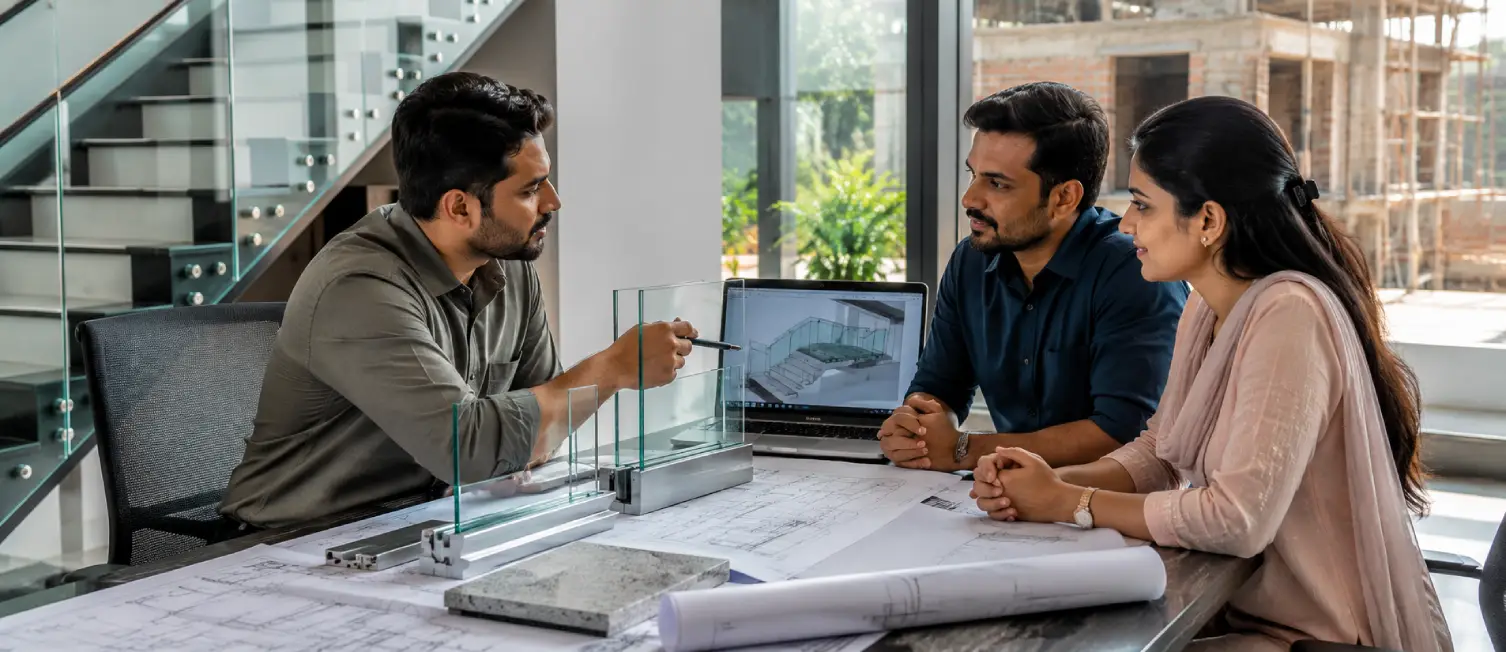
10. Skipping the Specialist Consultation
This is the biggest mistake on this whole list, by far. People design their glass railing off Pinterest and Instagram reels, then just hand it over to whoever gives the cheapest quote.
Getting a glass railing right means balancing structural safety, local codes, and how it actually looks, all at once. That takes real expertise. Not guesswork, not a good eye alone.
We have seen gorgeous designs fail because nobody checked whether the wall or floor could actually take the load. We have also seen perfectly safe railings that just look wrong because nobody matched the design to the building around it.
Skip the consultation, and you are basically setting up every other glass railing design mistake on this list to happen. It is the root cause of almost all of them, in our experience.
A Quick Checklist Before You Approve Any Design
If there is one thing to take away from all this, it is that most glass railing design mistakes trace back to the same root cause: someone skipped a step to save time or money.
So before you sign off on a final design, run through this:
- Has anyone actually calculated the load for this specific space, or is it just a guess based on similar projects?
- Does the glass type match where the railing sits and who is using that space?
- Has the hardware grade been checked against local weather, especially humidity and monsoon exposure?
- Does the design meet IS codes, with documentation to prove it?
- Is the handrail height right for the setting, not just for a nice photo?
- Has someone thought about how this railing looks and holds up a year from now, not just on installation day?
Six yeses means you have avoided most of the common mistakes already. Even one not sure is worth a phone call before the glass gets ordered.
Frequently Asked Questions for glass railing design mistakes
1. How much does a glass railing cost in Coimbatore?
Costs depend on the glass type, design, and hardware. A site visit is the best way to get an accurate estimate.
2. Is toughened glass enough, or should I choose laminated glass?
Toughened glass suits most homes. Laminated glass is a safer choice for higher floors or homes with children.
3. Can a glass railing be added to an existing balcony or staircase?
Yes. Most existing structures can be fitted with glass railings after a proper structural assessment.
4. How long does glass railing installation take?
Most residential installations take 1–2 days after the glass and hardware are ready.
5. What should I check before accepting a glass railing quote?
Ensure the quote clearly specifies the glass type, thickness, hardware grade, and installation details.
Conclusion
A good glass railing does two things at once. It holds up, and it looks like it belongs there. Getting both right takes more than flipping through a catalogue and picking whatever looks nice.
At TwinPro Ventures, we work with architects, builders, and homeowners across Coimbatore on structural glazing, spider glazing, and railing systems built to actually last. We handle the glass, the hardware, and the compliance side together, so you’re not stitching together advice from three vendors who’ve never spoken to each other.
Planning a glass railing for your home or office? Talk to us before the design gets finalized. We’ll help you dodge everything on this list, and probably a couple of things you hadn’t thought of yet.
Reach out to TwinPro Ventures for a site consultation, and let’s get your glass railing right from the first sketch.