


Spider Glazing Cost Per Sq Ft in India: What You’re Really Paying For
Spider Glazing Cost Per Sq Ft in India: What You’re Really Paying For
Ask five vendors for a spider glazing cost and you’ll probably get five different numbers. Somewhere between ₹500 and ₹2,000 per sq ft, and no real explanation for the gap. We hear this confusion almost every week at TwinPro Ventures. So let’s actually sort it out, plainly, without the sales pitch.
First, What Is Spider Glazing?

Quick refresher before the money talk.
Spider glazing is glass without visible frames. Small steel fittings, shaped a bit like spiders (yes, that’s really where the name comes from), bolt through the glass at the corners and hold everything in place. No aluminium frame in sight. Just glass, steel, and a whole lot of hidden engineering.
That’s the look you see on showroom fronts, office lobbies, and those glossy modern building entrances. Clean. Almost floating.
And that hidden engineering? It’s exactly why spider glazing cost jumps around so much from one project to the next.
Why the Price Isn’t a Fixed Number
This is what nobody tells you upfront: spider glazing cost isn’t one figure. It’s a pile of small decisions stacked on top of each other, and each one nudges the price.
Glass type Toughened, laminated, double glazed pick one and the rate shifts. Thicker glass costs more too. Need laminated glass for an overhead canopy? That pushes your spider glazing cost up a notch.
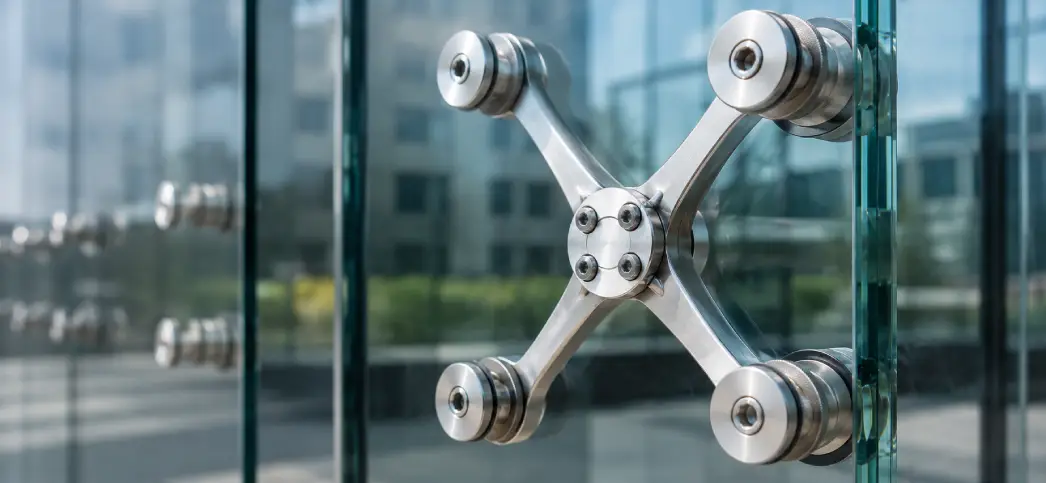
Fitting quality Not every spider fitting is built the same. Cheap cast steel is lighter on the wallet today, but it rusts faster, especially near the coast. We’ve seen clients save ₹50,000 upfront and spend double that on replacements three years later. Not worth it, honestly.
What’s holding the glass up This part gets skipped in most conversations. Behind every spider glazed wall, something is carrying the load, usually a glass fin or a steel truss. Small openings? Fins do the job. Anything spanning more than 5 metres, like an atrium or terminal, needs steel trusses. That’s a bigger spend, and it shows up in your spider glazing cost.
Height A ten-foot glass wall and a forty-foot one aren’t priced the same per sq ft, even with identical glass. Taller means more wind load, more structure, more scaffolding. Your rate climbs with the height.
Labour rates in Coimbatore are quite different from those in Mumbai. And ground floor access is a different job entirely from a fifth-floor facade that needs a crane.
Project size Bigger jobs usually bring the per-sq-ft rate down slightly. Design and mobilisation costs spread across more glass. Small orders often pay a bit more per foot for the same reason in reverse.
What Spider Glazing Actually Costs in India Right Now
Based on what we’re seeing across live projects, spider glazing cost sits somewhere between ₹700 and ₹2,000 per sq ft, fully installed.
- Budget range (₹700 – ₹1,000/sq ft): Basic 10-12mm toughened glass, standard fittings, glass fin support, easy ground-floor access.
- Mid range (₹1,000 – ₹1,500/sq ft): Laminated or double-glazed units, better stainless steel fittings, some height, a bit more structural work.
- Premium range (₹1,500 – ₹2,000+/sq ft): High performance glass with coatings, steel truss support for wide spans, tall buildings, tricky access, or heavy finishing work.
These ranges are wide, we know. That’s kind of the point. If a vendor hands you one flat number without breaking down glass, fittings, and support structure, ask again. A real quote should be able to explain itself.
One Real Example
Let’s look at the actual figures rather than making assumptions.
Say you’re doing a 500 sq ft showroom front in Coimbatore. Ground floor, 12mm toughened glass, decent fittings, glass fin support. At a mid-range rate of roughly ₹1,200 per sq ft, your spider glazing cost comes to about ₹6,00,000, before GST.
Now change the picture. Same 500 sq ft, but it’s the fourth floor of an office building, and you want laminated glass with a heat-reducing coating. Rate jumps to around ₹1,700-1,800 per sq ft, because of the glass upgrade, the crane needed for access, and extra structural support for wind at that height. Total spend? Closer to ₹8,50,000-9,00,000.
Same square footage. Nearly ₹3,00,000 apart. That gap is entirely down to glass spec, height, and access, not some vendor being sneaky. This is why “what’s your rate per sq ft” is a fair question but an incomplete one.
Spider Glazing vs Regular Framed Glass
Most people assume spider glazing costs a little more than framed glazing. It’s usually more than a little.
With framed glazing, the aluminium frame carries most of the structural load. The glass just sits inside it. Take the frame away, like spider glazing does, and now the glass and the hidden support structure have to do that heavy lifting on their own. Different engineering job entirely. That’s reflected in the price.
Expect spider glazing to run about 20-40% higher than standard framed glazing for a similar area, depending on your glass choice and support system. You’re paying for the look, sure. But you’re also paying for glass that’s carrying more weight than it would in a framed system.
Where the Money Actually Goes
Clients often want a line-by-line breakdown, so here’s roughly how spider glazing cost splits:
- Glass (35 – 45%): The panels themselves, based on type and coating
- Spider fittings (15 – 20%): The steel connectors and bolts
- Support structure (15 – 25%): Fins or trusses, depending on span
- Installation (10 – 15%): Site labour, alignment, sealing
- Design work (5 – 10%): Structural calculations, more for taller builds
Notice something? Glass isn’t even half. That’s why two quotes for “the same glass” can still land far apart. The support structure quietly does a lot of the work in the background.
Does It Cost More to Maintain Later?
Worth asking, since the installation bill isn’t the whole story.
Spider glazing holds up well with good fittings, but it’s not zero-maintenance. The silicone joints between panels need resealing roughly every 5-7 years. Fittings near the coast should get checked yearly, since salt air speeds up corrosion on lower-grade steel. Cleaning the glass is easy. Cleaning it forty feet up is not, and that access cost adds to your long-term bill.
None of this changes your upfront spider glazing cost, but it’s smart to budget for it separately. Paying a bit more for better fittings now usually saves you a bigger repair bill down the road.
Does the Price Change by City?
Yes, and it’s not small.
- South India (Chennai, Coimbatore, Bengaluru): Usually the most competitive, thanks to strong local fabrication.
- Mumbai, Pune: Around 10-15% higher, mostly labour and site logistics in dense areas.
- Delhi NCR: Similar to Mumbai on premium projects, more spread at the lower end.
- Smaller cities: Cheaper labour, but transport costs for glass and fittings can eat into the savings if local fabrication isn’t available.
If you’re comparing quotes from different cities, keep this in mind before assuming one is simply the better deal.
Is Spider Glazing Even Worth It?
Fair question, and we’d rather answer it honestly than sell you on it.
If you’re building a showroom, a reception area, or any entrance meant to leave an impression, spider glazing earns its cost. Light pours in without frame lines cutting up the view, and from the street, the glass genuinely looks like it’s floating. For a retail brand or a tech office, that first impression matters more than the extra spend.
If you’re working on a back-office space or a tight residential budget, it’s harder to justify. A good framed glazing system does the job for a lot less, and the visual upgrade won’t do much where footfall is low anyway.
We tell clients this even when it means recommending something cheaper. A facade that fits how the space actually gets used beats one that just looks nice in a render.
Mistakes That Push the Price Up Without You Noticing
We see the same handful of slip-ups on almost every over-budget project.
- Skipping wind-load checks. Undersized support gets caught during structural review, and fixing it later costs more than getting it right the first time.
- Picking fittings by price alone. Corroded fittings in three years means paying twice.
- Forgetting about site access. Realising you need a crane halfway through changes your numbers fast.
- Loose scope documents. No written glass thickness or fitting grade means you’re trusting the vendor’s memory, not your own decision.
Get the brief right at the start. It protects your spider glazing cost more than any last-minute negotiation ever will.
Before You Ask for a Quote, Have This Ready
Save yourself a few rounds of back-and-forth. Get these together first:
- Exact area in sq ft, measured, not guessed
- Glass preference, if you have one: toughened, laminated, or double-glazed
- Building height and floor
- Span between support points, if you know it
- Site access: ground floor, upper floor, crane needed or not
- Timeline, since rushed jobs sometimes cost more
- City and location, for accurate labour pricing
Walk in with this, and the spider glazing cost you get back will actually hold up, instead of shifting three times before work even starts.
FAQ for spider glazing cost
- 1. Can spider glazing cost be negotiated?
Yes, some costs like fittings, sourcing, and installation timelines can be negotiated. Structural support costs should not be compromised because they affect safety. - 2. Why do two quotes for the same space differ so much?
The difference usually comes down to glass thickness, fittings, or support structure. A much cheaper quote may use lighter materials or thinner glass. - 3. Is GST extra?
Yes, GST is usually added to the quoted per-sq-ft rate. Always confirm whether GST is included before comparing quotes. - 4. Can I bring the cost down without cutting quality?
Yes, by optimising sourcing, panel sizes, and installation schedules. These changes can reduce costs without compromising material quality. - 5. How much does spider glazing glass cost?
Spider glazing glass typically costs around ₹400 – ₹1,000+ per sq. ft., depending on thickness, type, size, and specification.
The final cost also depends on fittings and the supporting structure.
Conclusion
At TwinPro Ventures, we supply door and glass hardware, toughened glass, access controls, and facade systems, spider glazing included. We don’t hand out vague estimates and hope for the best. We walk through your glass spec, your support needs, and your site conditions with you, so your spider glazing cost is based on your project, not some average pulled from someone else’s job three cities away.
Planning a showroom entrance, an office facade, or anything where spider glazing might make sense? Talk to us. Tell us your area and location, and we’ll walk you through what your spider glazing cost should realistically look like, no guesswork involved.